
Humane Animal Transport Standards for Rescue Relocation: AWA Regulations, 28-Hour Law & Essential Guidelines
Picture this: a convoy of volunteers crisscrossing state lines, crates stacked high with wide-eyed dogs from hurricane-flooded shelters, kittens mewing softly beside rehabilitated wildlife. Rescue relocation has exploded in recent years—driven by shelter overcrowding, natural disasters, and a nationwide network of compassionate fosters. In 2023 alone, organizations shuttled tens of thousands of animals to safety, a surge fueled by apps, social media alerts, and dedicated drivers. Yet amid this noble rush, one truth stands stark: without rigorous humane animal transport standards, good intentions can lead to hidden suffering.
Federal regulations like the Animal Welfare Act (AWA) transport rules and the Twenty-Eight Hour Law provide the backbone for safe, ethical rescue relocation. They safeguard animals from heat stress, dehydration, and injury, while shielding coordinators from liability. For rescue transport coordinators, volunteer drivers, and shelter transfer managers, mastering these—alongside state-specific mandates—is non-negotiable. This guide, drawing from the Animal Welfare Information Center (AWIC) resources and USDA AWA guidelines, unpacks the essentials to keep your operations compliant and compassionate.
AWA Transport Requirements
The AWA, enforced by USDA APHIS, sets precise AWA transport regulations for animals in commerce, including many rescues. Primary enclosures—think airline-approved crates for dogs or carriers for cats—must be strong, clean, and sized for natural postures: standing, turning, and lying down without contortion.
Temperature control is critical: maintain 45°F to 85°F, with no direct sunlight or drafts. Ventilation demands 15% unbroken side space or mechanical airflow equivalent to 0.5 cubic feet per minute per pound of animal. Food and water? Every 12 hours for most species, documented clearly. And don’t forget the interstate health certificate: a licensed vet’s sign-off on fitness for travel, valid typically 30 days. AWIC’s transport resources detail these for species from rabbits to reptiles.
The Twenty-Eight Hour Law (49 U.S.C. 80502) and Its Requirements
Enacted in 1877 and codified at 49 U.S.C. § 80502, this law mandates that animals aboard common carriers—like trucks or trains—receive feed, water, and rest every 28 hours. Unloading into secure pens is required unless waived by the owner in writing.
Exceptions apply for air/sea travel or foreseeable delays, but for ground rescue relocation, plan stops accordingly. Non-compliance risks fines up to $1,000 per animal. Volunteer hauls may skirt direct applicability, yet adopting these standards elevates welfare universally.
Transport Vehicle Setup
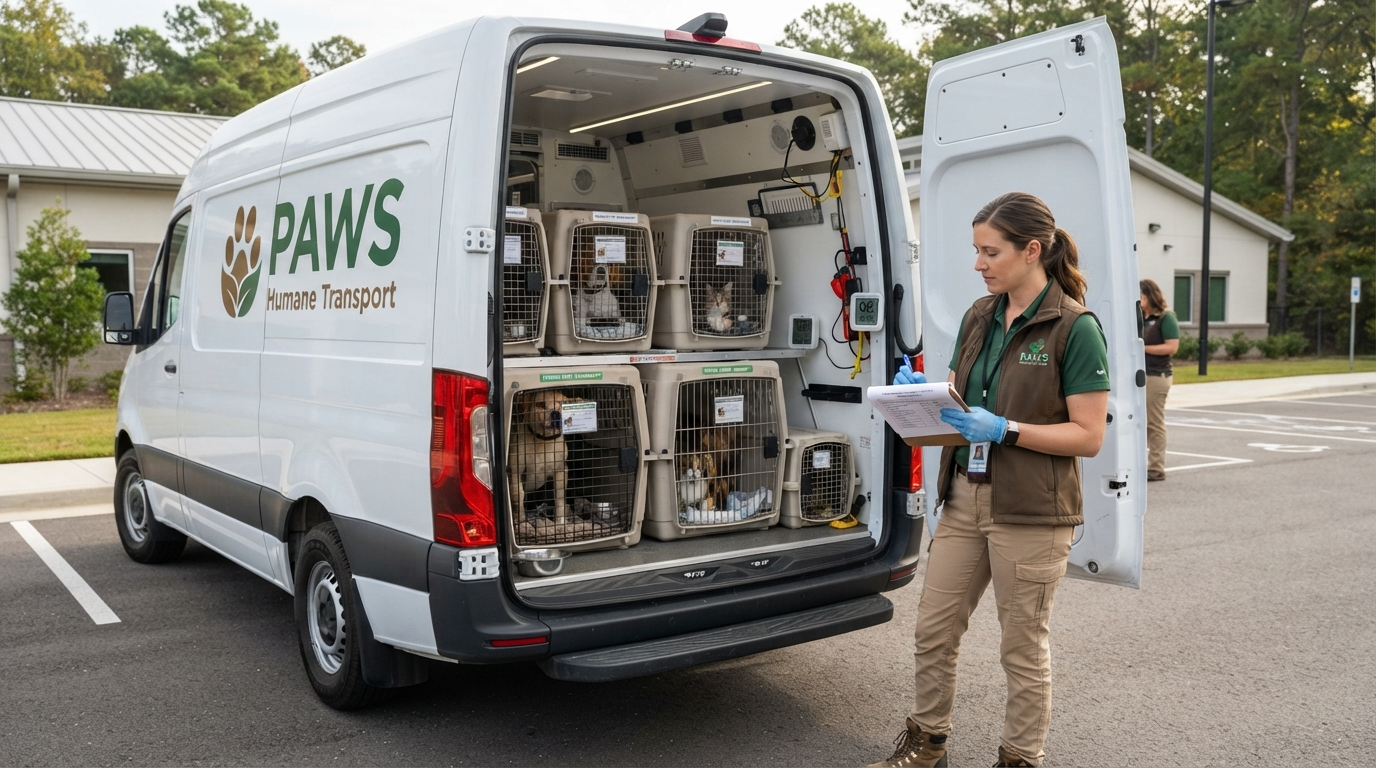
Your vehicle is the mobile sanctuary. Equip with climate control—HVAC or fans—to hold that 45-85°F sweet spot. Secure crates against shifts using straps or dividers; no stacking that blocks vents. Sanitation starts pre-trip: absorbent bedding, waste trays. Monitoring? Thermometers, hygrometers, and cameras ensure real-time checks on pups panting in the back or birds fluffing feathers.
Multi-Animal Transport Logistics
Mixing species? Proceed with caution. Isolate cats from dogs, aggressive breeds from timid ones, and males from females in heat. Littermates can share if compatible, but prioritize ventilation—aim for 20% airspace per animal. Examples: pair bonded rabbits, but solo ferrets to curb nipping.
Interstate vs Intrastate Requirements
Crossing borders demands a Certificate of Veterinary Inspection (CVI) or health certificate, plus rabies shots for dogs/cats over 12 weeks. States like California mandate microchips; Texas eyes import permits. Intrastate trips follow local rules, often lighter, but check NAWN’s state law database for seamless compliance. AWIC emphasizes pre-trip research to avoid border bounces.
Documentation for Transport
Paperwork is your shield. Pack CVI/health certs, vaccination records (rabies, core shots), a transport manifest listing each animal’s ID, origin, and destination, plus chain-of-custody logs. Digital tools streamline this—scans beat lost files on bumpy roads.
AWIC Transport Best Practices: Emergency Planning and Wildlife
Storms hit, tires blow—prep a kit with water, muzzles, first-aid, and vet contacts. Wildlife adds layers: USDA permits for raptors or amphibians, species-specific crates to mimic habitats. Route planning sidesteps rush hours; GPS tracks share locations with teams.
NAWN Transport Certificate Features
NAWN’s digital transport certificate revolutionizes humane animal transport standards. Auto-populate CVI data, embed manifests, generate QR-code chain-of-custody trails. Instant sharing with inspectors or receivers cuts errors, ensures AWA transport regulations adherence—all from your phone.
Pre-Transport Safety Checklist
- Verify health certs and vaccinations are current.
- Check crate sizes allow full movement.
- Test vehicle climate: 45-85°F steady.
- Ensure 15% ventilation per AWA.
- Secure all enclosures firmly.
- Load food/water for 24+ hours.
- Separate incompatible animals.
- Plan 28-hour stops if applicable.
- Pack emergency kit (water, bandages, phone chargers).
- Confirm route and state import rules.
- Calibrate monitors (temp, humidity).
- Document manifest and share digitally.
Armed with these guidelines—from AWA’s crate specs to the 28-Hour Law’s rest mandates—you’re equipped for flawless rescue relocation. Every safe arrival echoes your diligence, turning miles into miracles.
About NAWN: The National Animal Welfare Network (NAWN) is America's species-neutral animal welfare platform — providing lifetime digital registry, lost-pet recovery, foster coordination, wildlife protection, youth education, and career pathways in animal welfare.