
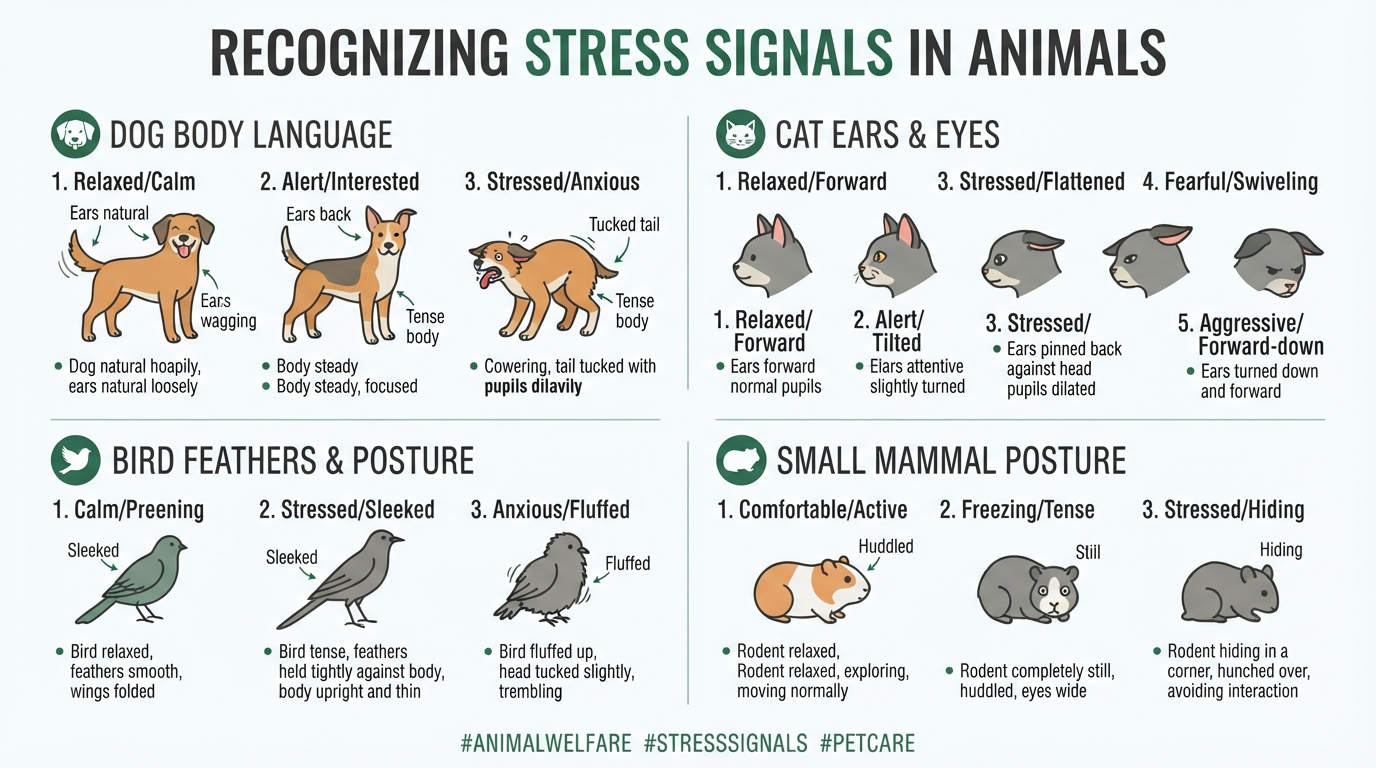
Decoding Animal Stress Signals: Master Body Language Across Species for Optimal Welfare
Picture this: a shelter dog cowers in the corner, ears pinned back, while a foster cat paces endlessly along the cage bars. These aren't random quirks—they're urgent pleas in the silent language of animal behavior. Mastering stress signals through body language isn't just a skill; it's the cornerstone of welfare assessment, turning you from caregiver to confidant for dogs, cats, small mammals, birds, and reptiles alike.
In the fast-paced world of pet ownership, fostering, and shelter work, overlooking these cues can escalate minor discomfort into chronic distress. Yet, with keen observation, you unlock a window into their emotional world, fostering trust and tranquility.
Body Language Basics: The Foundation of Animal Behavior Insight
Animal body language speaks volumes before a vocalization erupts. Posture, facial expressions, and micro-movements reveal inner states. A relaxed animal might stretch languidly or yawn comfortably; tension flips that script.
Key universals span species: dilated pupils signal arousal, lip licking or yawning displaces anxiety, and averted gaze dodges confrontation. Tune in daily—consistency in reading these builds your welfare assessment prowess.
The Four F's: Fight, Flight, Freeze, and Fidget in Stress Signals
Evolution wired animals for survival via the Four F's. Fight bristles fur and bares teeth. Flight prompts bolting or frantic scanning. Freeze halts motion, blending into safety. Fidget—pacing, tail flicking, or self-grooming—signals rising unease before extremes.
- Fight: Stiffened muscles, forward stare—approach with caution.
- Flight: Crouched readiness, wide eyes plotting escape.
- Freeze: Statuelike stillness, shallow breaths betraying fear.
- Fidget: Repetitive motions screaming, "Get me out of here!"
Spotting these in body language elevates your animal behavior radar, preventing welfare pitfalls.
Stress Signals Across Species: A Comparative Guide
Dogs and Cats: Tails, Ears, and Whiskers Tell All
Dogs tuck tails and whale-eye (whites showing); cats flatten ears sideways or swish tails whip-like. Both lip-lick amid overwhelm.
Small Mammals and Birds: Hiding, Fluffing, and Pinning
Hamsters ball up or freeze; rabbits thump and bolt. Birds fluff feathers, crouch, or fan tails—pinched feet signal distress.
Reptiles: Subtle Shifts in Color and Posture
Lizards darken or gape mouths; snakes hiss, strike poses, or hide relentlessly. Watch for rapid breathing or glass-surfing in tanks.
Assessing Emotional State: Behavior as Welfare Indicator
Chronic stress signals—persistent fidgeting, appetite loss, aggression—flag deeper issues. Pair body language with context for holistic welfare assessment. A thriving animal engages curiously; withdrawal whispers neglect or pain.
Environmental Factors and AWIC-Inspired Management
Noise, confinement, or novelty amplify stress. AWIC principles advocate enrichment: hiding spots, routines, species-appropriate scents. Dim lights for nocturnal critters, vertical space for climbers—tailor habitats to mute triggers.
Proactive tweaks—like puzzle feeders or quiet zones—transform body language from tense to serene.
When to Seek Professional Help
If signals persist despite adjustments—escalating aggression, lethargy, self-harm—call in vets or certified behaviorists. Early intervention safeguards welfare across species.
Empowerment lies in vigilance: decode today, nurture tomorrow. Your attuned eye could be the lifeline they crave.
About NAWN: The National Animal Welfare Network (NAWN) is America's species-neutral animal welfare platform — providing lifetime digital registry, lost-pet recovery, foster coordination, wildlife protection, youth education, and career pathways in animal welfare.