
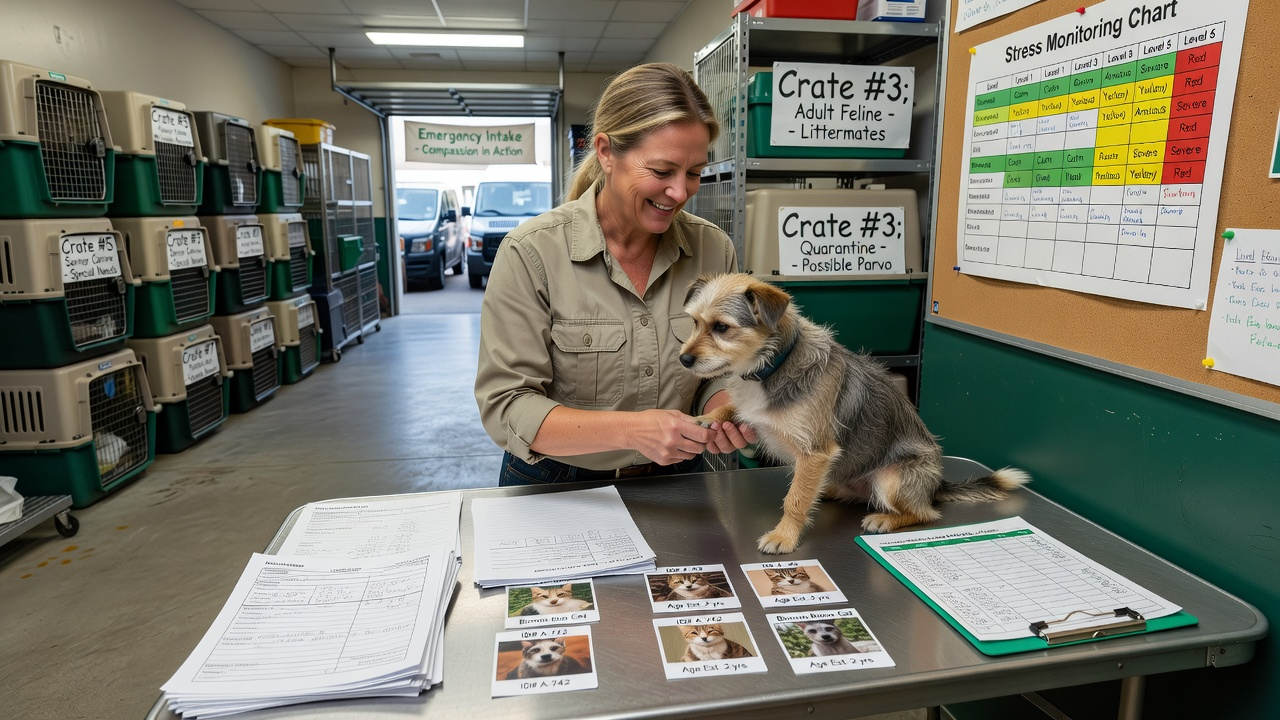
Emergency Animal Shelter Volunteer Intake Checklist: Ready to Help When It Matters
Picture this: floodwaters recede, and a stream of frightened dogs, cats, and wildlife pours into your temporary shelter. Amid the urgency, one overlooked detail—a missing tag or unlogged meal—could mean the difference between reuniting a pet with its family or prolonging its stress. As an emergency animal shelter volunteer, you're the steady hand in disaster animal sheltering. This shelter intake checklist equips you with authoritative, compassionate protocols to ensure every animal's safety and swift recovery. Print it, check it off, and step into the chaos prepared.
Intake Identification and Photo
First contact sets the tone. Capture vital details immediately to aid reunification in the frenzy of disaster response.
- Record found location, date/time, and describing details (color, breed estimate, age, sex, unique markings)
- Scan for microchip; note ID number and contact if registered
- Attach temporary ID collar or tag with intake number and shelter contact
- Take clear photos: full body (front/side), face close-up, and any injuries/special marks
- Log into central reunification database or board
Crate Labeling System
A simple, visible system prevents mix-ups when volunteers rotate through shifts.
- Create weatherproof labels: Intake #, species, arrival date, special needs (e.g., "Aggressive - Handle w/ Care")
- Color-code by species or risk level (e.g., red for medical priority)
- Affix to front and top of crate for quick visibility
- Update labels for status changes (fed, vetted, adopted)
Feeding and Water Log
Consistent nutrition combats stress; track meticulously to avoid over- or under-feeding.
- Note species-appropriate portions (e.g., puppies: small frequent meals)
- Log time, amount/type of food/water provided, and consumption level
- Refresh water every 2-4 hours; note refusals
- Flag dietary issues (e.g., vomiting) for vet review
Stress Sign Monitoring
Animals hide pain—your vigilance spots trouble early, easing suffering with compassion.
- Check hourly: panting, pacing, whining, hiding, aggression, or lethargy
- Provide enrichments: blankets, toys, quiet time
- Isolate highly stressed animals
- Escalate severe signs to lead/volunteer coordinator
Sanitation Schedule
Cleanliness curbs disease spread in cramped quarters—treat it as non-negotiable.
- Spot-clean waste every 30-60 min
- Full crate disinfect every 4 hours (pet-safe solutions)
- Wash hands/gloves between animals
- Rotate supplies to prevent shortages
Species Separation
Predator-prey instincts don't pause in crisis—segregate to protect all.
- Separate cats/dogs/small animals/livestock/wildlife zones
- Buffer zones with visual barriers
- Handle one species/group at a time
Reunification Tracking
Every intake is a potential homecoming—prioritize outreach relentlessly.
- Post photos/descriptions to social media, lost pet sites, vet boards
- Update status daily: holds, fosters, adoptions
- Verify owners with proof (photos, vets)
Self-Care and Rotation Breaks
You can't pour from an empty vessel—sustain your compassion through smart pacing.
- Rotate shifts every 2-4 hours; hydrate and eat
- Wear PPE; monitor for fatigue/heat stress
- Debrief with team; seek support if overwhelmed
With this checklist, you're not just volunteering—you're a lifeline. Check off each step, breathe deep, and remember: every mark brings an animal closer to safety.
About NAWN: NAWN empowers animal welfare volunteering through resources, training, and community for disaster response.