
Pet First Aid Guide: Essential Kit, Emergency Checklists & Life-Saving Tips for Dogs, Cats & More
Why Every Second Counts
Imagine this: It's a quiet evening when your dog's playful chew on a toy turns into desperate gagging—a choking hazard unfolding before your eyes. Your heart pounds, but you take a deep breath, grab your pet first aid kit, and act swiftly. Or picture your cat batting at a toxic lily petal, suddenly lethargic. In these heart-stopping moments of emergency pet care, panic can cloud judgment, but calm preparation saves lives. Every second counts because your pet can't speak their distress—they rely on you. Mastering pet first aid empowers you to bridge the gap until professional help arrives, turning potential tragedy into a tale of triumph.
Pet First Aid Kit Essentials - Printable Checklist
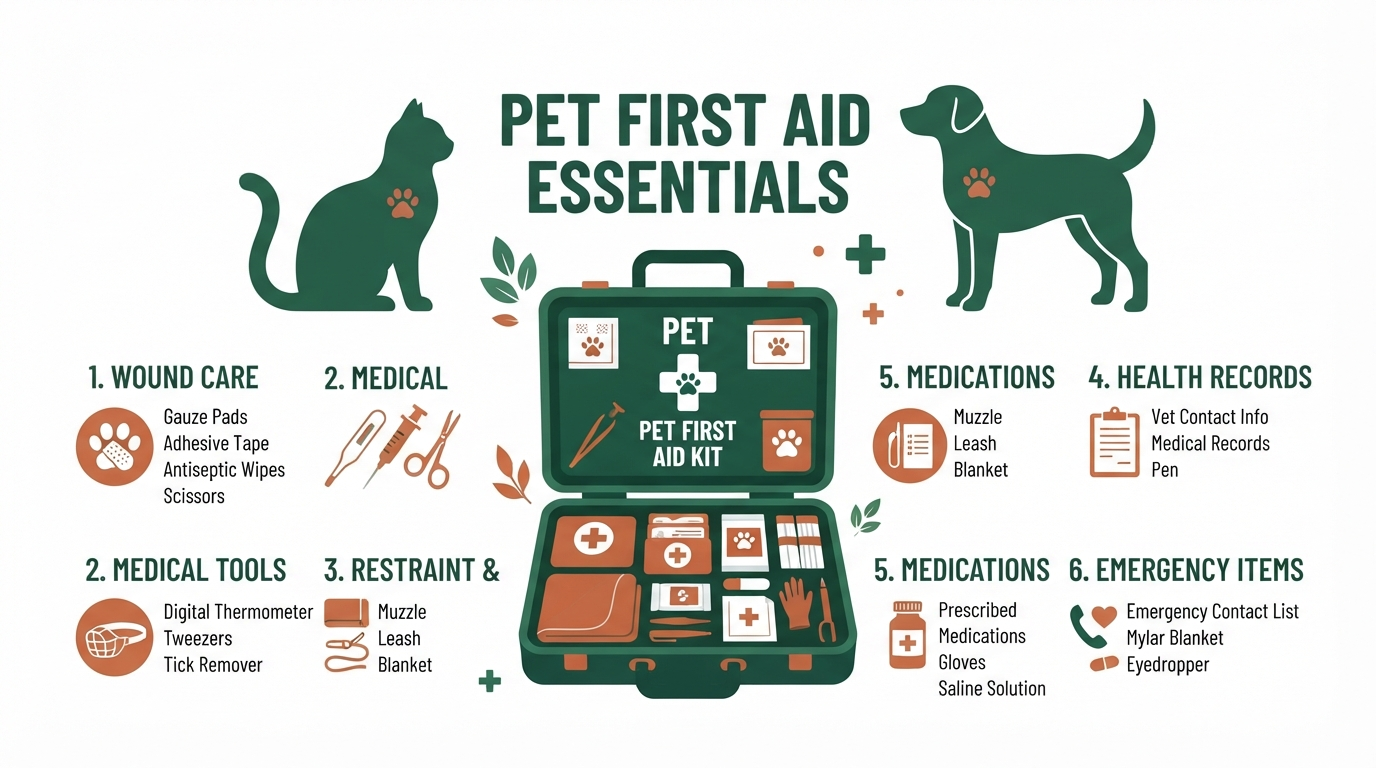
Assemble a dog first aid kit or cat first aid kit now—tailor it for small mammals like rabbits by using smaller bandages and tools. Store in a waterproof container with emergency contacts: your vet, ASPCA Poison Control (888-426-4435), and Pet Poison Helpline (855-764-7661). Print and check off this list:
- - [ ] Non-stick gauze pads and vet wrap bandages (various sizes)
- - [ ] Digital rectal thermometer with lubricant
- - [ ] Saline solution for flushing eyes/wounds
- - [ ] Styptic powder for nail bleeds
- - [ ] Blunt scissors and tweezers
- - [ ] Muzzle or cone collar
- - [ ] 3% hydrogen peroxide (for induced vomiting, vet-guided only)
- - [ ] Activated charcoal (for pet poisoning)
- - [ ] Benadryl (diphenhydramine, dose by weight)
- - [ ] Towel, blanket, and ice packs
- - [ ] Disposable gloves and penlight
- - [ ] Emergency contact list and notepad
Emergency Response Checklists
Wounds and Bleeding
- - [ ] Muzzle if aggressive pain; stay calm
- - [ ] Apply direct pressure with gauze for 5-10 minutes
- - [ ] Elevate limb if possible
- - [ ] Clean with saline; bandage loosely
- - [ ] Monitor—no eating if shock signs
Poisoning
- - [ ] Identify and remove toxin; note amount/time
- - [ ] Call poison hotline immediately—do NOT induce vomit unless advised
- - [ ] Prevent absorption: activated charcoal if directed
- - [ ] Transport with sample of toxin
Choking
- - [ ] Restrain gently; open mouth, sweep object if visible (no fingers blindly)
- - [ ] Dogs: Heel-to-rib thrusts + abdominal thrusts
- - [ ] Cats/small pets: Back blows between shoulder blades
- - [ ] If unconscious, CPR; rush to vet
Heatstroke
- - [ ] Move to cool area; wet with cool (not ice) water
- - [ ] Fan vigorously; offer small water sips
- - [ ] Monitor temp; seek vet if over 104°F
Seizures
- - [ ] Clear area; do not restrain or put hands near mouth
- - [ ] Time seizure; cushion head
- - [ ] After: Dark, quiet; vet if >5 min or clusters
Allergic Reactions
- - [ ] Remove allergen; give Benadryl (1mg/lb)
- - [ ] Monitor for swelling/breathing issues
- - [ ] Vet for anaphylaxis (facial swelling, collapse)
When to Go to Emergency Vet vs Treat at Home
Use this decision guide for emergency pet care:
| Situation | Treat at Home | Rush to Emergency Vet |
|---|---|---|
| Minor wounds | Clean, bandage, monitor | Bleeding >10 min, deep punctures, exposed bone |
| Pet poisoning or pet choking | Call hotline first | Symptoms like vomiting, seizures, collapse |
| Heatstroke/seizures | Initial cooling/timing | Unresponsive, prolonged (>5 min), recurring |
Vital Signs Cheat Sheet
Check these baselines quickly:
- Dogs: Temp 100-102.5°F | Heart rate 70-160 bpm | Breathing 10-35/min
- Cats: Temp 100.4-102.2°F | Heart rate 140-220 bpm | Breathing 16-40/min
- Rabbits: Temp 101-103°F | Heart rate 180-350 bpm | Breathing 30-60/min
Deviations signal urgency—practice checking gently.
Be Ready Before You Need It
Don't wait for crisis—build your kit today, quiz family on steps, and enroll in the NAWN registry. This species-neutral platform tracks microchips, aids recovery, and supports care from adoption to end-of-life, giving you peace of mind.
About NAWN: NAWN · National Animal Welfare Network is a species-neutral animal registry, recovery, and compassionate care platform trusted by families nationwide. Offering privacy-safe recovery, verified care coordinators, and lifetime care lifecycle tools from intake to Rainbow Bridge memorials.