
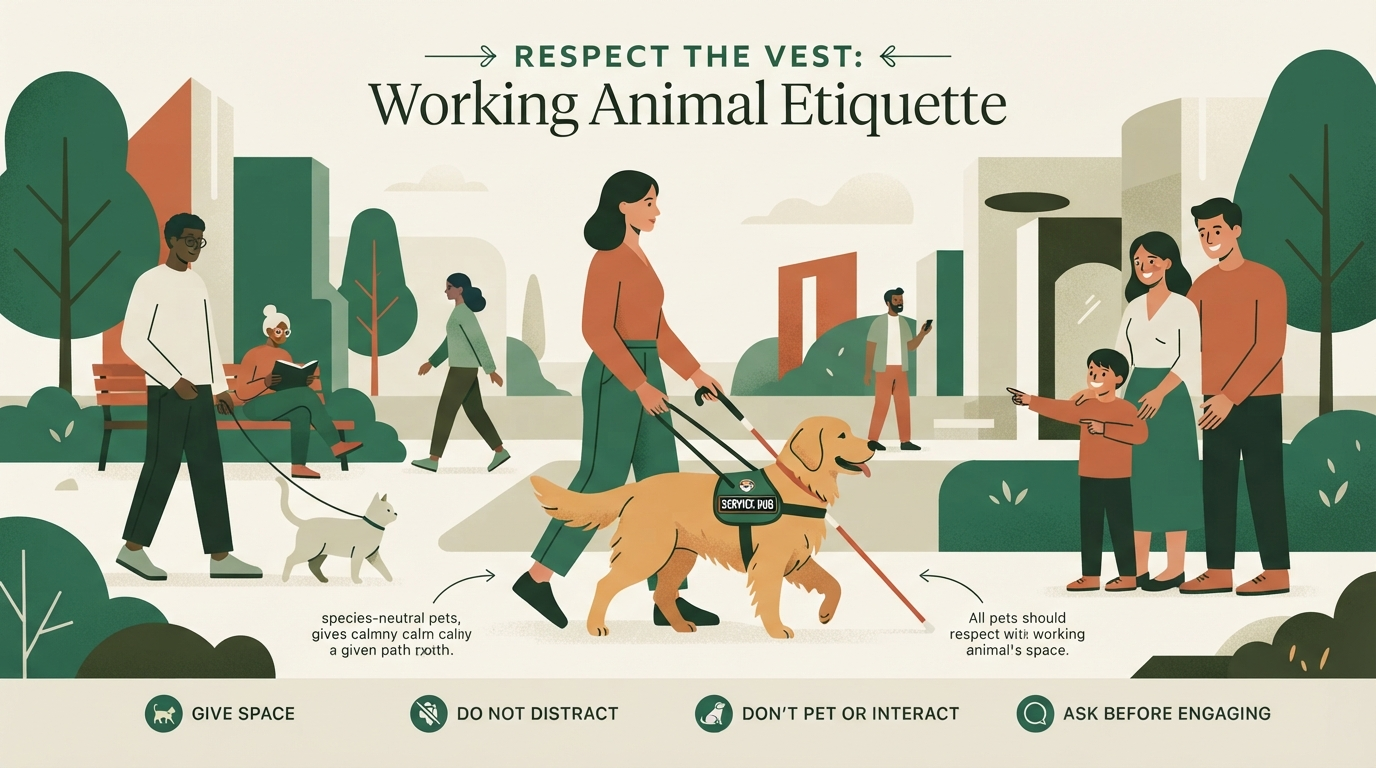
Service Animal Etiquette: Essential Rules for Respecting Working Dogs and Their Handlers
Picture this: a bustling grocery store aisle, where a golden retriever in a bright vest guides its handler with unwavering focus. Suddenly, a well-meaning stranger lunges forward with outstretched hands and cooing words. In that instant, the dog's attention fractures, potentially endangering the person it serves. Moments like these highlight why mastering service animal etiquette isn't just polite—it's vital for safety and dignity.
Service dogs, trained to assist with tasks like seizure detection, mobility support, or diabetes alerts, aren't pets. They're working professionals. Respecting their role through proper working dog etiquette fosters inclusivity and prevents mishaps. Whether you're a parent corralling curious kids, a shop owner welcoming all customers, or simply out in public, these guidelines empower you to interact thoughtfully.
Core Rules of Service Dog Manners
At the heart of service dog manners lies a simple mantra: treat the dog as working equipment, not a fluffy friend. Here's how to embody that respect daily.
Never Distract or Pet Without Permission
These dogs ignore distractions by design, but your sudden pat, whistle, or excited bark can break their concentration. Always ask the handler first—and prepare for a "no." A momentary lapse might mean a missed medical alert or unsteady navigation.
Skip the Treats and Food Offers
Tempting as it is to reward those soulful eyes, food disrupts training and health protocols. Service dogs follow strict diets; unsolicited snacks risk allergies or digestive issues, compromising their reliability.
Speak to the Handler, Not the Dog
Direct your questions or comments to the human partner. Cooing at the dog reinforces unwanted social behavior, pulling focus from critical duties. Eye contact with the handler keeps interactions professional and efficient.
- Keep a respectful distance—about 3-5 feet.
- Avoid sudden movements or loud noises.
- If the dog wears 'Do Not Pet' gear, honor it without question.
Teaching Children Working Dog Etiquette
Kids' natural affinity for animals is a gift, but it needs channeling. Frame lessons as superhero rules: "Working dogs are on a mission—help them succeed!" Practice scenarios at home: spot the vest, freeze, and wave to the handler. Role-play reinforces that pets stay leashed and distant, preventing tugs or chases. These habits build empathy early, turning pint-sized enthusiasts into considerate citizens.
Business Owners: Embrace Service Animal Responsibilities
Under the Americans with Disabilities Act, public spaces must accommodate service animals without question—no proof required, no pet fees. Train staff on service animal etiquette: welcome handlers warmly, ignore the dog unless directed, and ensure clear paths. Post signage reminding patrons of these norms. Your vigilance creates safe havens, boosting goodwill and compliance.
Navigating Tricky Situations
If a Service Dog Approaches Without Its Handler
Stay calm. Don't touch or call it. Alert nearby staff or the handler gently if safe. These dogs rarely stray far, but your restraint prevents escalation.
Managing Your Own Pet
Leash up tight and create space. Dogs read body language; excitement can spark reactivity. A quick detour models exemplary working dog etiquette.
Adopting these practices transforms everyday encounters into acts of profound respect. In a world rushing by, pausing for service animal etiquette honors the extraordinary partnership between dog and handler—and elevates us all.
About NAWN: The National Animal Welfare Network (NAWN) is America's species-neutral animal welfare platform — providing lifetime digital registry, lost-pet recovery, foster coordination, wildlife protection, youth education, and career pathways in animal welfare.