
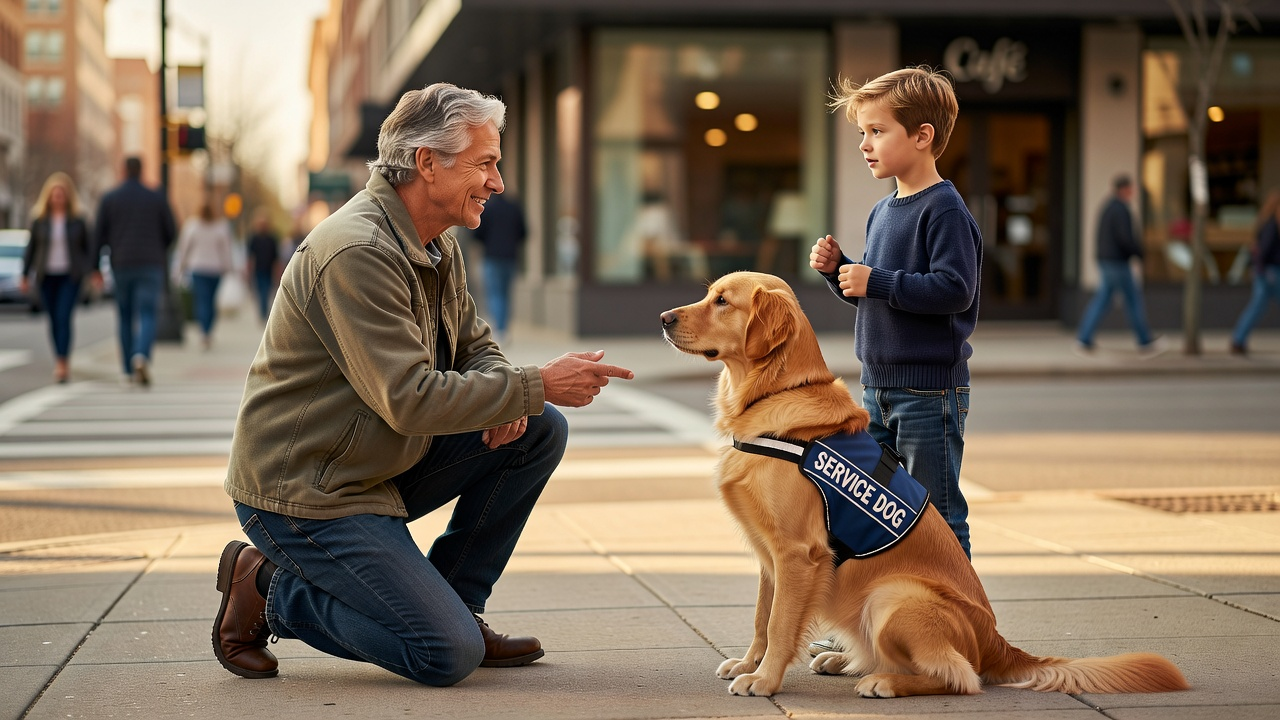
Service Dog Etiquette 101: Essential Rules for Interacting with Service Animals
Picture this: You're navigating a bustling coffee shop when a sleek Labrador in a bright vest glides past, eyes locked on its handler—a person with a subtle limp, confidently ordering a latte. The dog's harness screams purpose, yet a child darts forward to pet it, treats tumble from pockets, and suddenly, the calm focus shatters. In that split second, service animal etiquette becomes more than manners; it's a lifeline.
Service dogs aren't pets—they're highly trained partners performing life-saving tasks like detecting seizures, guiding the blind, or alerting to diabetic lows. Mastering service animal etiquette ensures their vital work continues uninterrupted. Here's what every member of the public needs to know about how to interact with service dogs, distilled into essential, no-fail rules.
Never Distract a Working Service Dog
Service dogs live in a world of laser focus. A momentary glance your way could mean missing a critical cue from their handler. Pat, coo, clap, or wave? That's a hard no. Distractions derail tasks that keep handlers safe and independent. Think of the dog as an extension of the person's body—interrupting it is like grabbing someone's cane mid-stride.
In public spaces from grocery aisles to airports, your best move is to admire from afar. A quick smile to the handler acknowledges the team without pulling focus.
No Petting or Food Without Permission
Petting: Ask the Handler First
That fluffy coat begs for a scratch, but service dogs are off-duty from affection during work. Always direct your question to the handler: "Is it okay to pet your dog?" If yes, a brief pat on the side or shoulder keeps the dog's attention forward. Respect a no—many handlers decline to maintain training.
Food: Keep Treats Out of Sight
Dropping kibble or sneaking a biscuit breaks training bonds built over years. Food temptations can lead to begging habits or handler mistrust. Stash snacks securely and move on.
Speak to the Handler, Not the Dog
"Good boy!" might feel natural, but talking to the dog pulls it from duty. Address the human every time—whether asking about the vest's meaning or offering a seat. This respects the partnership and avoids confusion. Handlers appreciate polite curiosity channeled correctly.
Keep Your Pet at a Safe Distance
Your leashed Labradoodle might be friendly, but service dogs don't do playdates on the job. Unfamiliar animals spark reactivity, risking handler safety. Cross the street, wait in another line, or scoop up your pup. A buffer zone preserves peace for all.
What If the Service Dog Approaches You Alone?
Rarely, a dog might investigate independently—stand still, avoid eye contact or commands, and let it decide. It's likely performing a task, like checking for allergens. Don't engage; wait for the handler.
Educate Children on Service Animal Etiquette
- Explain vests mean "working, don't touch."
- Practice phrases like "Look, don't touch!"
- Role-play scenarios at home for real-world grace.
Kids' excitement is pure, but guidance turns it into empathy. Frame it as superhero rules: Service dogs save the day, so we stay out of theirs.
Mastering Service Animal Etiquette Matters
These rules aren't barriers—they're bridges to inclusion. Next time you spot a service dog duo, your restraint might just enable a quiet victory: a handler shopping solo, stress-free. Small acts of awareness ripple wide.
About NAWN: NAWN is your premier resource for navigating the world of working animals, delivering expert insights on service animal etiquette, training tips, and community stories to foster respect and understanding for these incredible teams.