
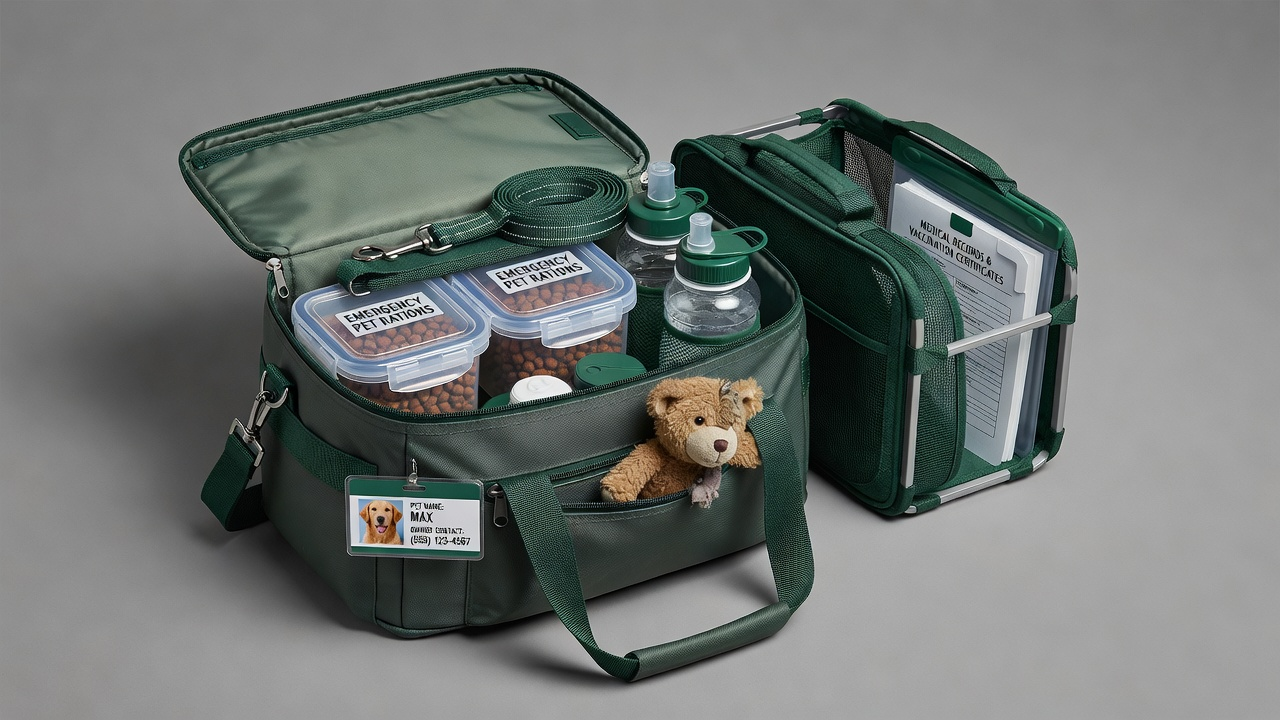
Ultimate Pet Evacuation Go-Bag: What to Pack Before Disaster Strikes
Picture this: sirens wail as floodwaters rise, or flames lick the horizon in a wildfire. Your heart pounds not just for your family, but for the wide-eyed pet staring up at you, leash in paw. In disaster-prone regions, seconds count. A well-stocked pet evacuation go-bag transforms chaos into control, ensuring your companion's safety amid the storm. This guide delivers the ultimate pet emergency kit checklist, born from real-world disaster preparedness for pets. Whether you care for dogs, cats, birds, reptiles, or fosters in flux, preparation saves lives.
The Two-Kit System: Stay-at-Home Kit vs. Go-Bag
Smart pet owners build two kits. The stay-at-home kit anchors your home base for sheltering in place during events like power outages or quarantines. Stock it with 7-14 days of supplies in a dedicated closet or garage bin: extra food, water, batteries, and backups for all essentials.
The pet evacuation go-bag, however, is your grab-and-go lifeline. Lightweight and portable, it covers 5-7 days for fleeing floods, fires, or hurricanes. Keep it by the door, in your car trunk, or at work. Rotate perishables every six months. This dual approach covers every scenario in pet disaster preparedness.
Building Your Pet Evacuation Go-Bag: Waterproof Container Setup
Start with a sturdy, waterproof container. Opt for a backpack, duffel bag, or wheeled plastic bin with a secure lid. Label it boldly: "Pet Evac Kit - [Your Pets' Names]." Add a trash bag liner for easy cleaning. Size it for quick carry, fitting leashes, carriers, and bowls without bulk.
- Waterproof backpack or duffel (20-40 liters)
- Heavy-duty trash bags (2-3)
- Permanent marker for labeling
- Ziplock bags for organization
Ultimate Pet Emergency Kit Checklist
Print this list. Check off each item. Tailor quantities to your pet's size, species, and needs - from a hamster's tiny portions to a horse's hay bales for fosters. Store in species-neutral fashion for multi-pet homes.
Food and Water Supply (5-7 Days)
- - [ ] Non-perishable food (dry kibble, canned, or species-specific like pellets/insects; 1 gallon per day per medium pet)
- - [ ] Collapsible food/water bowls (2-3)
- - [ ] Water (1 gallon per day per pet + human; purification tablets)
- - [ ] Manual can opener
Medications and Medical Records
- - [ ] Current medications (2-week supply in original bottles)
- - [ ] Vaccination records, microchip info, vet contacts (laminated copies)
- - [ ] First-aid kit: bandages, antiseptic, tweezers, hydrogen peroxide
- - [ ] Prescription copies and allergy list
Leash, Harness, and Carrier
- - [ ] Leash, collar, harness (extra set)
- - [ ] Sturdy carrier/crate (airline-approved, labeled with your contact)
- - [ ] Muzzle if needed for safety
- - [ ] Towels/blankets for padding
Sanitation Supplies
- - [ ] Poop bags/scoops (100+)
- - [ ] Litter/pad supply (disposable tray if space allows)
- - [ ] Pet-safe disinfectant wipes
- - [ ] Gloves, paper towels
Comfort Items, Photos, and ID
- - [ ] Familiar toys, bedding (unwashed for scent)
- - [ ] Current photos (printed/digital; pet + you together)
- - [ ] ID tags updated; microchip scanner if applicable
Emergency Contacts Card
- - [ ] Laminated card: your info, vet, emergency foster, NAWN hotline
- - [ ] Local shelters/animal control numbers
- - [ ] Pet insurance details
Final Steps for Disaster Preparedness Pets
Practice evac drills with your pets. Map pet-friendly hotels and shelters. For foster caregivers, duplicate kits per animal. A pet emergency kit is love in action - compact, ready, reassuring. Build yours today; regret waits for no one.
About NAWN: The National Animal Welfare Network (NAWN) is America's species-neutral animal welfare platform - providing lifetime digital registry, lost-pet recovery, foster coordination, wildlife protection, youth education, and career pathways in animal welfare.