
Ultimate Sanctuary Fire Plan: Prevention, Evacuation & Contingency Guide for Animal Rescues
Picture this: It's 2 a.m., and the sharp crackle of flames pierces the quiet night air at your sanctuary. Hay bales smolder in the corner of the barn, smoke curling toward the rafters where your rescued horses sleep. Your heart races—but you're ready. A well-crafted sanctuary fire plan transforms chaos into calculated action, safeguarding lives and livelihoods. Barn fires claim countless animal rescues annually, often due to preventable sparks or delayed responses. This guide, drawing from resources like Open Sanctuary Project's fire safety tips, FEMA's Ready.gov, NFPA standards, and USDA animal welfare guidelines, equips sanctuary operators, barn managers, safety officers, and disaster coordinators with an airtight animal evacuation plan and sanctuary contingency planning. It's educational fuel for your barn fire safety toolkit—not legal or veterinary advice.
From sparking prevention to seamless evacuations, we'll map every step. Lives—human and animal—depend on it.
Prevention: Stop Fires Before They Start
The best sanctuary fire plan begins in the daylight hours, far from any flicker of flame. Electrical mishaps ignite nearly half of barn fires, per NFPA data. Banish extension cord daisy-chaining; opt for dedicated circuits inspected annually by licensed electricians. Heaters demand equal vigilance—space them three feet from combustibles, test thermostats monthly, and service fuel lines before winter bites.
Institute a ironclad no-smoking policy, with designated areas 50 feet from structures. Store hay, straw, and bedding in detached sheds, rotated to prevent mold-fueled heat. Hot work like welding? Require permits, fire watches, and extinguishers at the ready. These habits, echoed in Open Sanctuary's contingency resources, form the unyielding foundation of barn fire safety.
Fire Safety Checklist for Barns and Structures
- Electrical panels grounded and labeled; no exposed wiring.
- Heaters elevated, with guards; cords undamaged.
- Combustibles stored 20+ feet from buildings.
- Smoking prohibited; signs posted.
- Lightning rods on high-risk structures.
Early Detection: Eyes and Ears on Alert
Seconds count when smoke whispers through stalls. Arm your sanctuary with ABC multipurpose extinguishers—at least 5 pounds each—mounted near every exit, electrical panel, and high-risk zone like tack rooms. Inspect them monthly: check pins, gauges, and seals. Hardwired smoke and heat detectors in barns, lofts, and offices chirp early warnings; test weekly, replace batteries biannually.
Clear, glow-in-the-dark signage points to extinguishers and shutoffs. Integrate these into your animal evacuation plan, as FEMA urges for pet disaster preparedness. A vigilant setup buys precious time for evacuation.
Maps and Counts: Your Blueprint to Safety
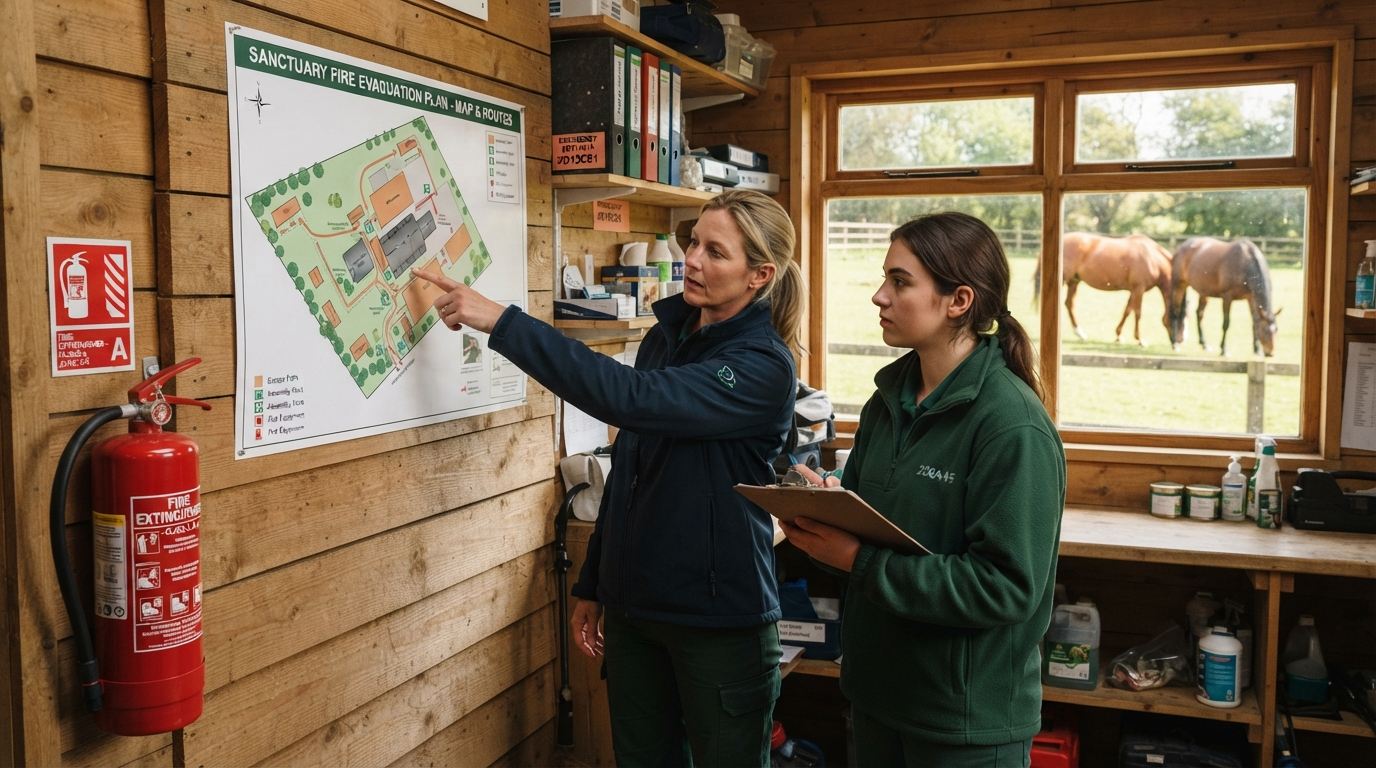
Laminated evacuation maps aren't optional—they're your lifeline. Pin them at every entrance: mark primary and secondary exits, utility shutoffs (water, gas, electric), extinguisher spots, and headcounts per enclosure. Note non-ambulatory residents and species clusters. Designate temporary holding areas—open pastures or arenas—clear of fire truck access lanes, at least 100 feet from buildings.
Update maps quarterly or after changes. This precision, aligned with USDA animal safety protocols, ensures no resident is overlooked in the heat of a sanctuary fire plan rollout.
Species-Specific Evacuation: Tailored for Every Resident
One size never fits all in animal rescues. Halters and leads hang ready by horse stalls for quick leading; poultry coops stack into wheeled carriers. Herd animals follow leaders—release a trusted goat to guide the flock. For non-ambulatory pigs or sheep, pre-rig slings or carts. Small mammals? Crates lined with familiar bedding reduce panic. Practice these moves to harness instincts, turning potential stampedes into orderly flows per Open Sanctuary guidance.
Transport and Mutual Aid: Routes to Refuge
Evacuation doesn't end at the gate. Maintain 12-foot-wide vehicle access lanes, trimmed and graveled. Test multiple routes quarterly for trailer heights, weight limits, and low bridges. Keep fuel tanks topped and spares on hand. Forge mutual-aid pacts with fairgrounds, equestrian centers, and neighboring sanctuaries—pre-arrange space for surges.
Plan for utility failures: 72+ hours of feed reserves, backup generators with fuel, and stored water troughs. These layers fortify your sanctuary contingency planning.
Drills and Communication: Rehearse for Reality
Theory crumbles without practice. Run annual full-scale drills: simulate alarms, execute evacuations, script 911 calls like "Animal sanctuary fire at [address]; 45 residents evacuating; hazards include hay stores." Log everything—times, issues, lessons—in a dedicated binder.
Clarify chain of command: designate roles for staff. Maintain contact lists for fire departments, vets, directors. For reunification, leverage NAWN's recovery registry. Public messaging? Pre-draft updates: "All animals safe; updates forthcoming." Crisp communication prevents rumors from fanning flames.
Record Backup: Safeguard Your Sanctuary's Memory
Disasters devour paper trails. Cloud-backup animal records, photos, and maps offsite daily—think Google Drive or dedicated services. Include medical histories for quick vet handoffs. This digital fortress ensures continuity in your animal evacuation plan.
Comprehensive Fire Safety Checklist
- All structures: Extinguishers inspected, detectors tested.
- Barns: Hay storage detached; halters accessible.
- Offices: Records backed up; shutoffs mapped.
- Overall: Drills logged; mutual aid confirmed.
A robust sanctuary fire plan isn't a document—it's a promise kept in the dark. Start today: audit your setup, drill your team, connect with partners. When the unthinkable ignites, you'll lead with calm precision.
NAWN (North American Wildlife Network) champions sanctuary resilience through recovery services and a national animal registry for swift reunifications post-disaster. Join our network for resources and support.
Published: October 10, 2024 | Last Reviewed: October 10, 2024