
Ultimate West Coast Pet Safety Guide: Earthquake-Proofing, Wildfire Evacuation, Smoke Protection & Tsunami Prep for CA, OR, WA
Picture this: the earth bucks violently beneath your California home as the San Andreas Fault roars to life, or acrid smoke from an Oregon wildfire chokes the air while displaced bears prowl your backyard. On the West Coast—from sun-baked LA hills to misty Washington shores—pet owners face a relentless trio of threats: earthquakes, wildfires, and tsunamis. These aren't distant hypotheticals; they're the region's signature hazards, amplified by the Cascadia Subduction Zone's looming menace and Santa Ana winds that turn brush into infernos. For the millions of pet parents and rural residents in California, Oregon, and Washington who share their lives with dogs, cats, birds, horses, livestock, and wildlife neighbors, preparedness isn't optional—it's a lifeline. This guide delivers earthquake pet safety West Coast strategies, wildfire evacuation animals plans, smoke inhalation pets protections, tips on handling displaced wildlife bears mountain lions, and essential tsunami pet planning California Oregon Washington. Let's safeguard your animal companions, one actionable step at a time.
Earthquake-Proofing Your Home for Animals
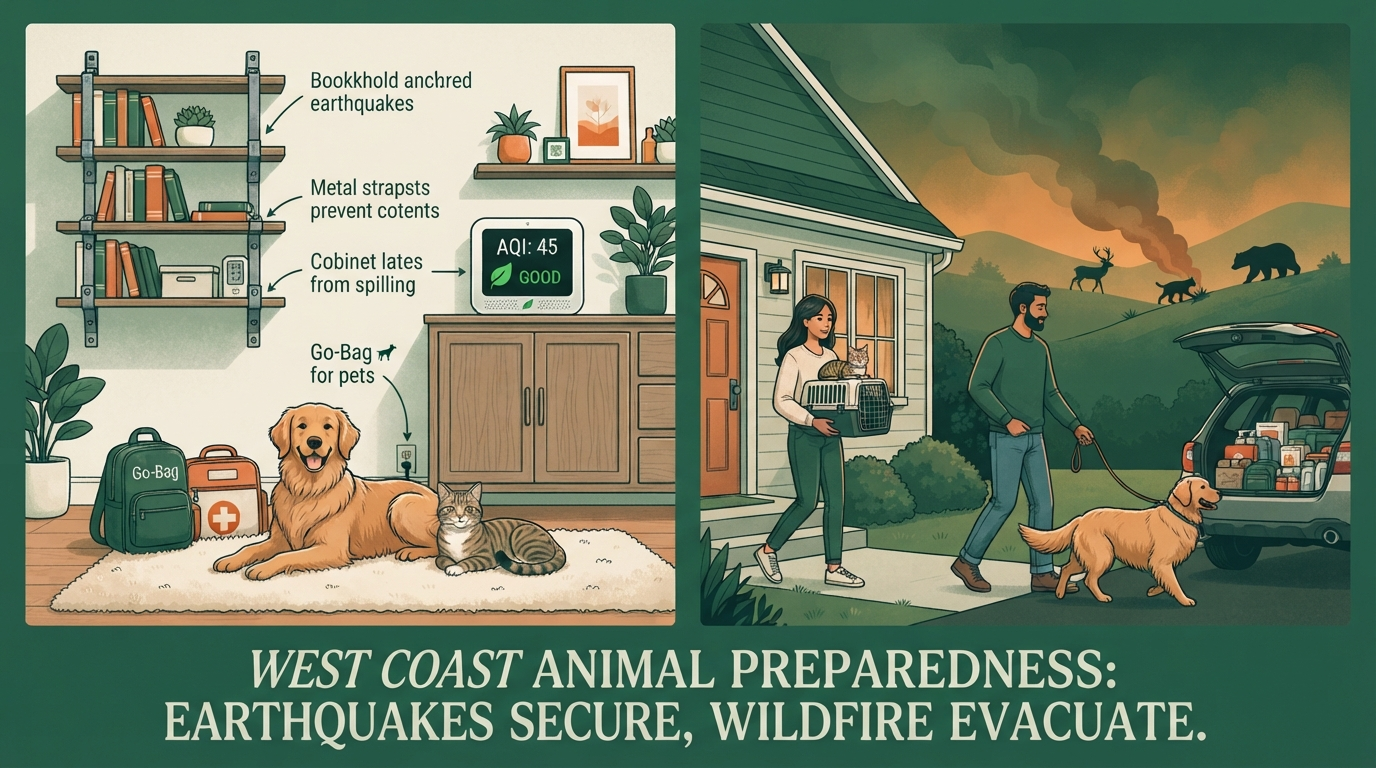
Earthquakes strike without warning, toppling shelves and shattering glass in seconds. In seismic hotspots like the San Andreas corridor or Cascadia zone, your pets' safety hinges on a fortified home. Start by anchoring tall furniture—bookcases, cabinets, TVs—to walls with brackets, preventing them from crushing curious cats or panicked pups. Install quake valves on gas lines and latch cabinet doors with child-proof straps to keep hazards contained. Create a secure "pet safe room": a central, windowless space stocked with beds, water, and leashes, away from exterior walls.
Earthquake Kit Checklist
Print this list and keep it handy—your pet's survival kit in one grab-and-go bin.
- Extra collars, leashes, harnesses, and carriers for all pets (labeled with your contact info).
- Two-week supply of food and water (rotate every six months).
- Medications, vaccination records, and vet contact info in a waterproof pouch.
- Muzzles for dogs (stress can trigger bites), blankets for comfort, and litter/pan for cats/small animals.
- Battery-powered radio, flashlight, batteries, and pet first-aid kit (bandages, antiseptic, tweezers for glass shards).
- Copies of microchip info and photos of you with each pet for reunification.
- Cash, ID copies, and local emergency maps marked with pet-friendly shelters.
Practice "drop, cover, and hold on" drills with your animals. Reward calm behavior to build resilience. In the chaos, a well-prepped space means your furry family emerges unscathed.
Wildfire Evacuation With Animals: Level 1, 2, 3 Readiness
Wildfires don't knock politely. Fueled by Santa Ana winds in Southern California or dry lightning in the Pacific Northwest, they demand split-second decisions. Adopt the "Ready, Set, Go" framework from fire agencies: Level 1 (Ready) means pre-packing; Level 2 (Set) triggers alerts; Level 3 (GO) is immediate evac. For wildfire evacuation animals, livestock like horses need trailers pre-loaded, while small pets require carriers. Map multiple routes, identify pet-friendly hotels or farms, and board animals early if flames encroach.
Wildfire Go-Bag Checklist
Customize per species and keep bags by every exit.
- Species-specific carriers/crates (test-fit your pet; birds need covered travel cages).
- 7-day food/water supply, collapsible bowls, and cooling towels for heat-stressed animals.
- Health records, prescriptions, flea/tick preventives, and calming aids like pheromone sprays.
- Towels for wiping soot paws, waste bags, and portable fencing for livestock.
- GPS collars or AirTags for escape-prone pets; LED collars for nighttime evac.
- Face masks or damp cloths for smoke (fit-tested for horses and dogs).
- Boarding confirmations and neighbor contacts for mutual aid.
Load trailers at Level 2. Never tie animals outdoors during evac—smoke and panic can turn safe spots deadly. Your foresight turns terror into triumph.
Protecting Pets from Smoke Inhalation
Wildfire smoke isn't just hazy skies—it's a toxic soup of particulates that inflames lungs. Smoke inhalation pets risks hit birds hardest (delicate airways), followed by brachycephalic dogs, cats, small mammals, and horses with heaves. Watch for coughing, wheezing, rapid breathing, lethargy, blue gums, or nosebleeds. Move indoors, seal windows with wet towels, and run HEPA air purifiers. For outdoor livestock, provide deep bedding and misting fans.
Air Quality Monitoring Tips (AQI for Pets)
Use apps like AirNow.gov for real-time AQI. Pets feel effects at lower thresholds: limit outdoor time below 100 AQI for sensitive species; evacuate below 150 if possible. Indoor plants like spider plants filter air naturally. Hydrate heavily and monitor vulnerable birds/small pets hourly— their silence can signal distress.
Handling Displaced Wildlife: Bears, Mountain Lions, Deer
Fires displace wildlife, sending displaced wildlife bears mountain lions and deer into suburbs. In fire-ravaged zones from Big Sur to Olympic Peninsula, hungry bears raid trash, mountain lions stalk pets, and panicked deer crash fences. Secure food sources: lock garbage, feed pets indoors, bring birds inside. Never approach—make noise to haze bears (banging pots), but avoid cornering cougars. Report sightings to wildlife agencies; secure livestock in sturdy enclosures. Hazing works: water sprays deter deer. Coexistence saves lives on both sides.
Tsunami Zone Pet Planning for Coastal Families
Cascadia's next megaquake could spawn tsunamis slamming Oregon and Washington coasts, with CA's faults adding risk. For tsunami pet planning California Oregon Washington, know your zone via tsunami.gov maps—evacuate uphill immediately post-quake if sirens wail. Pre-identify high-ground muster points with pet zones. Use hands-free carriers for agility; microchip everything. Practice family drills: pets first in the chaos. Coastal horse owners, plan beach-to-hill routes. Alerts via Wireless Emergency Alerts save seconds that count.
Join NAWN: Your Partner in Pet Disaster Preparedness
At NAWN (North American Wildlife Network), we're dedicated to bridging the gap between pets, people, and wildlife in high-risk regions. From workshops on quake kits to wildfire webinars, we empower West Coast families with resources that work. Preparedness isn't fear—it's love in action. Build your plan today; your animals are counting on you.