
ADA Service Animal Rules: Complete Guide to Titles II & III, Definitions, Rights & More
Imagine stepping into a bustling restaurant, your loyal service animal at your side, only to face a skeptical glance and a pointed question about proof. Moments like these highlight why understanding ADA service animal rules matters deeply for handlers, business owners, and even pet owners navigating public spaces. This guide breaks down the essentials of ADA Titles II and III, clarifying service animal rights and empowering everyone involved.
Breaking Down ADA Titles II and III
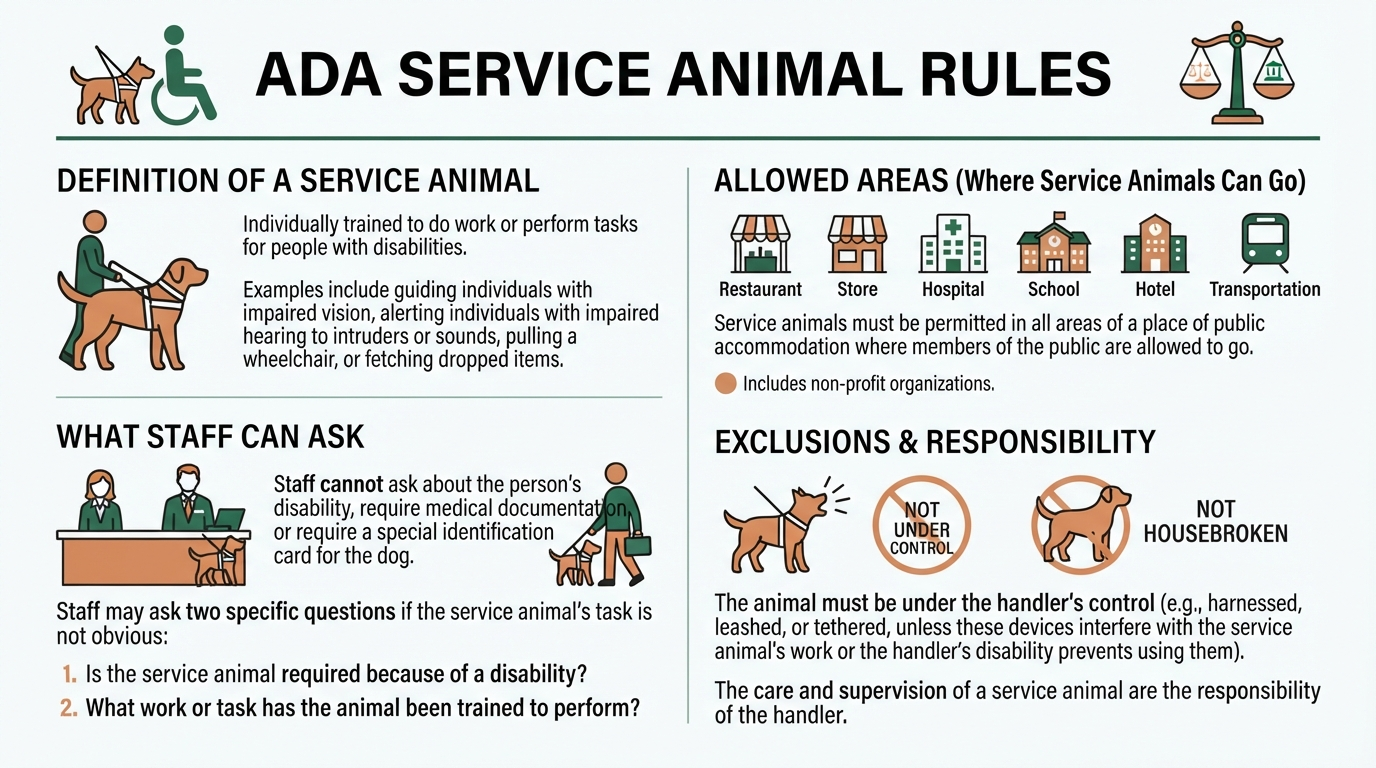
The Americans with Disabilities Act (ADA) of 1990 transformed access for people with disabilities. Title II covers state and local governments, including public schools, libraries, and courthouses. These entities must permit service animals in all public areas, even where pets are barred. No exceptions for safety concerns unless the animal poses a direct threat.
Title III applies to private businesses open to the public, such as stores, hotels, and theaters. Businesses cannot deny entry to qualified service animals accompanying individuals with disabilities. These ADA Titles II and III rules ensure dignity and independence, framing service animals as working partners, not pets.
Service Animal Definition Under the ADA
The ADA defines a service animal narrowly: dogs individually trained to perform specific tasks or work directly related to a person's disability. Miniature horses qualify too, if they meet size, weight, and behavioral criteria assessed case-by-case. This service animal definition excludes species like cats or birds, focusing on reliability and training.
The Two Questions Businesses Can Ask
Curiosity is fine, but limits exist. Staff may ask only two questions: (1) Is the dog a service animal required because of a disability? (2) What work or task has the dog been trained to perform? No demands for IDs, vests, demos, or medical docs. Observe behavior; if disruptive, address like any patron.
Where Service Animals Must Be Allowed
Under ADA service animal rules, access mirrors public entry. In restaurants, service animals go to tables. Hotels provide rooms without surcharges. Hospitals allow them in patient areas, barring sterile zones. Governments under Title II open all facilities. Exceptions? Only if the animal is out of control and handler fails to respond, or poses proven danger.
What is NOT a Service Animal Under ADA
- Emotional support animals, offering comfort without trained tasks.
- Therapy animals visiting facilities.
- Pets, no matter how well-behaved.
- Untrained animals claiming "psychiatric service" without specific work.
Conflating these erodes true service animal rights. Vests or patches? Optional, meaningless legally.
State and Local Requirements, Plus Penalties
ADA sets the federal floor; states often expand it, allowing miniature pigs or monkeys. Always check local laws, as they may exceed ADA Titles II III standards. Interfering? Face complaints to the Department of Justice, investigations, fines up to $75,000 for first violations, or lawsuits for damages.
Differences Between ADA and State Laws
ADA uniformity contrasts state variety. California recognizes more species; Florida mandates trainer certs sometimes. Federal rules preempt conflicts, but states add protections. Handlers enjoy the broadest rights; businesses comply with both.
Navigating these waters builds compassion and compliance. Knowledge turns potential conflicts into seamless encounters.
About NAWN: The National Animal Welfare Network (NAWN) is America's species-neutral animal welfare platform - providing lifetime digital registry, lost-pet recovery, foster coordination, wildlife protection, youth education, and career pathways in animal welfare.