
AWA Quick Reference Guide Deep Dive: Essential Shelter Standards for Animal Welfare (Part 1)
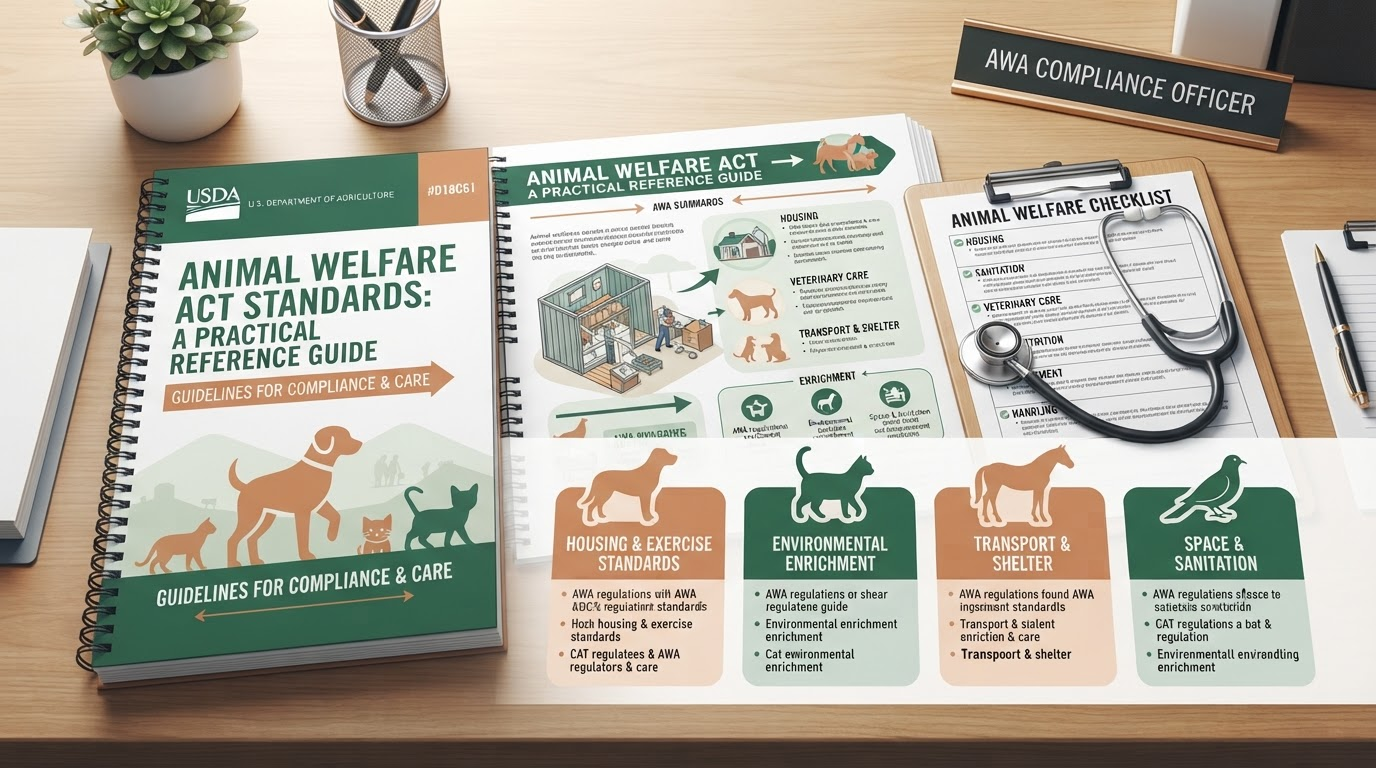
Picture this: a bustling shelter where every wide-eyed newcomer receives not just food and water, but a structured lifeline of care backed by federal benchmarks. In the trenches of animal rescue, chaos can eclipse compassion—unless you have a compass like the Animal Welfare Act (AWA) Quick Reference Guides from AWIC. Created by the USDA's National Agricultural Library's Animal Welfare Information Center (AWIC), these guides distill the dense 9 CFR Parts 1-3 into actionable insights. Why? To empower dealers, exhibitors, researchers—and forward-thinking shelters—with tools for unwavering compliance and superior welfare. This deep dive, Part 1 of our 6-part AWIC series on shelter standards, unpacks essentials from these guides, helping you elevate operations even if AWA doesn't legally bind your doors.
What 9 CFR Parts 1-3 Cover
At the heart of USDA APHIS enforcement lies 9 CFR Parts 1-3, the regulatory backbone of the Animal Welfare Act. AWIC's AWA Quick Reference Guides break them down for swift navigation, revealing a framework that's as vital for licensed facilities as aspirational gold for shelters.
Part 1: Definitions and Terms
Start here for clarity. Part 1 defines key terms like "dealer," "exhibitor," and "research facility," plus critical concepts such as "veterinary care" and "handling." For shelters, grasping these prevents missteps—knowing a "consignee" from a "transferor" streamlines intake protocols, per AWIC guidance.
Part 2: Licensing, Registration, and Compliance
This part mandates licenses for those dealing, exhibiting, or transporting regulated animals, alongside registration for research entities. It outlines inspections by USDA APHIS, reporting duties, and compliance protocols. Shelters eyeing AWA Quick Reference adoption gain foresight into audit-ready practices.
Part 3: Species-Specific Standards
The practical core: facilities, housing, feeding, watering, sanitation, veterinary care standards, transportation, and handling. Tailored by species group—from guinea pigs to primates—these ensure humane conditions, offering shelters a blueprint beyond dogs and cats.
Key Personnel Under the AWA
No operation thrives without the right team. AWIC highlights roles ensuring accountability, adaptable to shelter hierarchies.
Attending Veterinarian Responsibilities
The cornerstone: a licensed vet overseeing a written program of veterinary care standards. Duties include daily guidance, illness diagnosis, surgery, and euthanasia protocols. Shelters benefit immensely from designating an AV for proactive health management.
IACUC Role and Composition
For research facilities, the Institutional Animal Care and Use Committee reviews protocols, inspects biannually, and reports. Comprising a vet, researcher, and non-affiliate, it models oversight shelters can emulate via welfare committees.
Principal Investigator Duties and Animal Caretakers
PIs ensure protocol adherence; caretakers handle daily tasks competently. Training is non-negotiable—AWIC stresses this for minimizing stress and injury.
Daily Care Standards That Shelters Can Adopt
AWIC's guides emphasize routines that save lives. Daily observation is mandatory—personnel must check each animal for health, distress, or injury, documenting issues promptly.
Veterinary care standards demand timely treatment: adequate nutrition, clean water, safe housing free of hazards. Handling principles prioritize gentleness—short capture times, minimal restraint—to reduce trauma. Adopt these, and your shelter transforms into a sanctuary of standards.
Record-Keeping Requirements
Documentation isn't bureaucracy; it's proof of compassion. AWIC outlines must-haves: individual ID for regulated species, medical records detailing treatments, acquisition/disposition logs tracking every animal's journey, and training records for staff handling.
- Daily observation notes
- Vet exam and treatment logs
- Source and destination records
- Training certifications
These build defensible histories, fostering transparency.
How Rescues and Shelters Can Use AWA as Gold Standard
Many shelters operate outside AWA jurisdiction—no licenses needed for local adoptions. Yet voluntary alignment with 9 CFR elevates credibility. It builds adopter trust, aligns with NAWN verification, and preempts scrutiny. AWIC's AWA Quick Reference makes it feasible: implement piecemeal, measure impact, scale up.
Checklist for Voluntary AWA-Standard Compliance
- Designate an Attending Veterinarian and draft a veterinary care program.
- Conduct daily observations of all animals, logging findings.
- Ensure housing meets Part 3 space, sanitation, and ventilation standards.
- Implement gentle handling and restraint training for staff.
- Maintain individual medical records for treatments and observations.
- Track acquisition, disposition, and transport details.
- Provide species-appropriate nutrition and clean water daily.
- Form a welfare oversight committee akin to IACUC.
- Document staff training on AWA principles.
- Perform regular facility inspections and corrections.
- Secure prompt veterinary care for illnesses or injuries.
- Review and update programs annually.
Embracing these shelter standards isn't just compliance—it's a commitment to dignity for every creature in your care. Dive deeper in Part 2 as we explore facilities and housing. Consult AWIC's resources today.
About NAWN: The National Animal Welfare Network (NAWN) is America's species-neutral animal welfare platform — providing lifetime digital registry, lost-pet recovery, foster coordination, wildlife protection, youth education, and career pathways in animal welfare.