
AWIC Deep Dive: Mastering Behavioral Management in Shelters – Enrichment, Stereotypy Prevention & Positive Reinforcement
Picture a shelter dog frozen at the kennel door, tail thumping wildly at the sight of a familiar volunteer, or a cat perched high on a shelf, eyes half-closed in contentment. These moments aren't random—they signal thriving behavioral health. In animal shelters, where stress runs high and time is short, behavior stands as the ultimate welfare indicator and a powerful predictor of adoption success. Animals exhibiting confident, species-typical behaviors not only enjoy better quality of life but also catch adopters' eyes faster. Mastering behavioral management enrichment shelter practices draws directly from AWIC guidelines, transforming chaotic kennels into havens that support natural instincts and pave the way for forever homes.
This deep dive, Post 5 of 6 in our AWIC series under Shelter Animal Welfare, equips behavior staff, enrichment coordinators, foster caregivers, and adoption counselors with actionable strategies. From preventing stereotypic behavior to implementing positive reinforcement training shelter protocols, we'll explore how to elevate welfare assessments and boost outcomes.
Components of Behavioral Management
Effective behavioral management weaves together enrichment, training, environmental design, and social housing—like threads in a safety net for shelter animals' mental well-being. Enrichment provides sensory stimulation to mimic wild or home environments, curbing boredom. Training builds trust through rewards, while thoughtful environmental design optimizes space for movement and rest. Social housing pairs compatible animals to fulfill companionship needs, reducing isolation-induced stress.
AWIC emphasizes integrating these elements holistically. For instance, rotating toys and scents in kennels prevents habituation, keeping engagement high without overwhelming fragile newcomers.
Species-Typical Behavior Patterns and How to Support Them
Dogs: Sniffing and Social Play
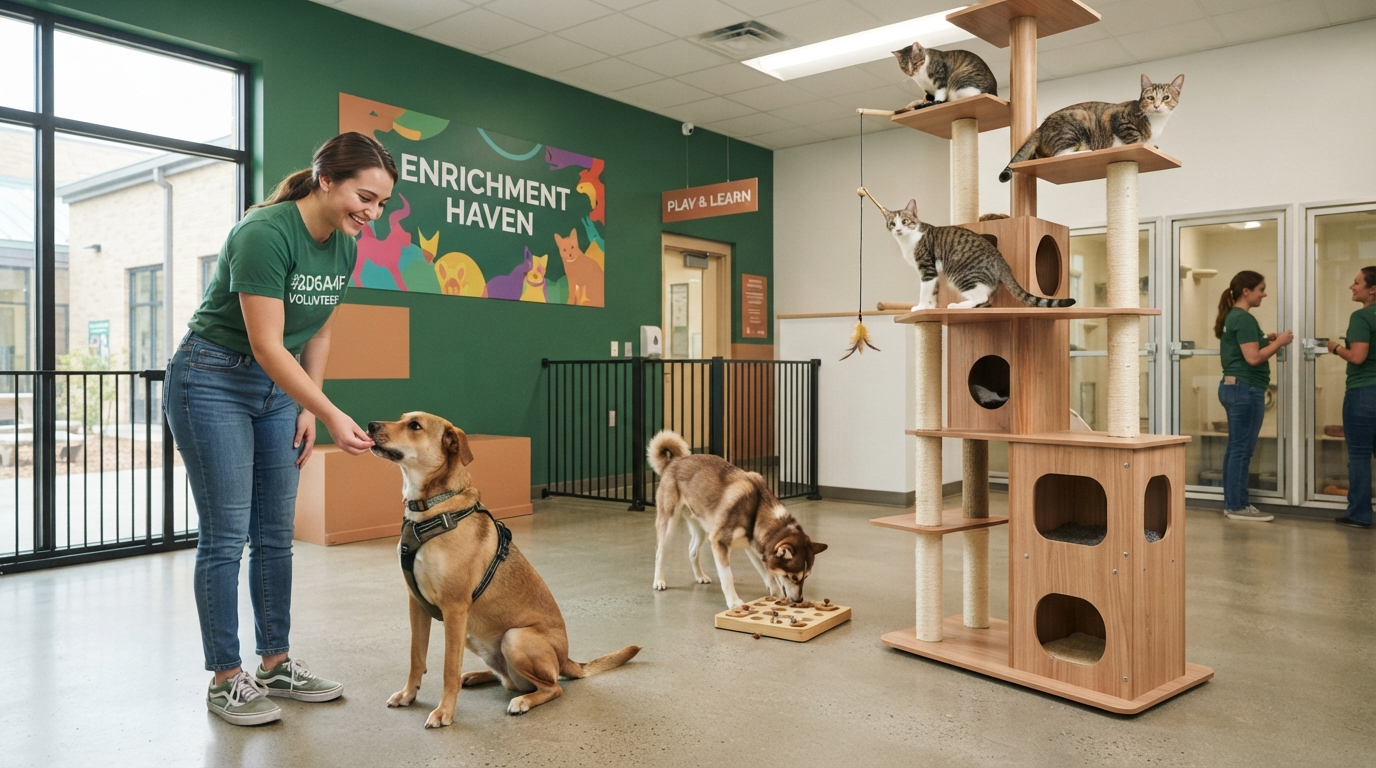
Dogs thrive on olfactory exploration and pack interactions. Support species-typical behavior with scent trails in play yards, puzzle feeders, and supervised group play sessions to channel their investigative drive.
Cats: Climbing, Scratching, and Hiding
Vertical space reigns for cats. Install multi-level towers, sisal posts for scratching, and enclosed dens to honor their solitary hunters' instincts, fostering security amid shelter noise.
Rabbits: Chewing and Digging
Provide safe chew toys like apple branches and dig boxes filled with shredded paper, preventing destructive habits born from unmet needs.
Birds: Foraging
Scatter food in varied substrates or use foraging balls to replicate wild scavenging, sharpening natural problem-solving skills.
Reptiles: Basking
Ensure precise thermal gradients with heat lamps and UVB sources, allowing thermoregulation essential for activity and appetite.
Identifying and Addressing Stereotypic Behaviors
Stereotypic behaviors—repetitive, functionless actions like pacing in dogs, over-grooming in cats, or cage circling in rabbits and birds—scream unmet needs. Causes often trace to barren environments, chronic stress, or medical issues. Early spotting via welfare assessment is crucial: watch for patterns during low-activity periods.
Intervene swiftly with targeted enrichment. A pacing dog might need longer walks and interactive toys; an over-grooming cat benefits from pheromone diffusers and hiding spots. AWIC stresses root-cause analysis over suppression, pairing interventions with veterinary checks to rule out pain.
Positive Reinforcement Training in Shelter Settings
Positive reinforcement training shelter methods shine here, using markers like clickers to bridge desired actions and treats. Start with handling desensitization: reward calm responses to touch, building tolerance for exams. Advance to cooperative care, teaching animals to station for nails or meds voluntarily.
Safety protocols are non-negotiable—train in short, positive sessions, respecting body language to avoid shutdowns. This not only eases daily care but showcases adoptable traits to families.
Behavior Assessment as Part of Welfare Evaluation
Embed standardized assessments, like AWIC-recommended protocols, into routine welfare assessment. Evaluate upon intake, mid-stay, and pre-adoption—timing captures stress peaks and recovery. Score approachability, playfulness, and relaxation to track progress objectively.
Sidestep bias by using blinded observers or video reviews, ensuring decisions prioritize animal needs over haste.
Record-Keeping for Behavioral Observations and Connecting Behavioral Health to Adoption Success
Meticulous logs—daily notes on appetite, activity, and interactions—link behavioral health to outcomes. Detailed records flag trends early and inform adopter counseling, like matching high-energy dogs with active homes.
NAWN elevates this: behavioral notes in our lifetime digital registry refine adoption matches, alerting fosters and families to preferences for smoother transitions.
Daily Behavioral Management Checklist for Shelter Staff
- Rotate enrichment items: toys, scents, puzzles per species needs.
- Monitor for stereotypies: note duration, triggers, intervene immediately.
- Conduct 5-minute positive reinforcement sessions with at least 50% of animals.
- Assess welfare: body language check on intake/mid-stay/pre-adoption.
- Log observations: appetite, sociability, any changes.
- Pair social housing where compatible; supervise introductions.
- Update NAWN registry with behavioral insights for better matches.
Further Learning from AWIC
Deepen your expertise with AWIC resources on Environmental Enrichment for Shelter Animals, Stress Recognition in Captive Species, Training Protocols for Small Mammals, and Behavioral Indicators of Welfare. These guides offer evidence-based tools tailored for shelters.
Behavioral mastery doesn't just prevent problems—it unlocks potential, turning shelter stays into springboards for joyful lives. Implement these AWIC-inspired strategies, and watch welfare soar alongside adoption rates.
About NAWN: The National Animal Welfare Network (NAWN) is America's species-neutral animal welfare platform — providing lifetime digital registry, lost-pet recovery, foster coordination, wildlife protection, youth education, and career pathways in animal welfare.