
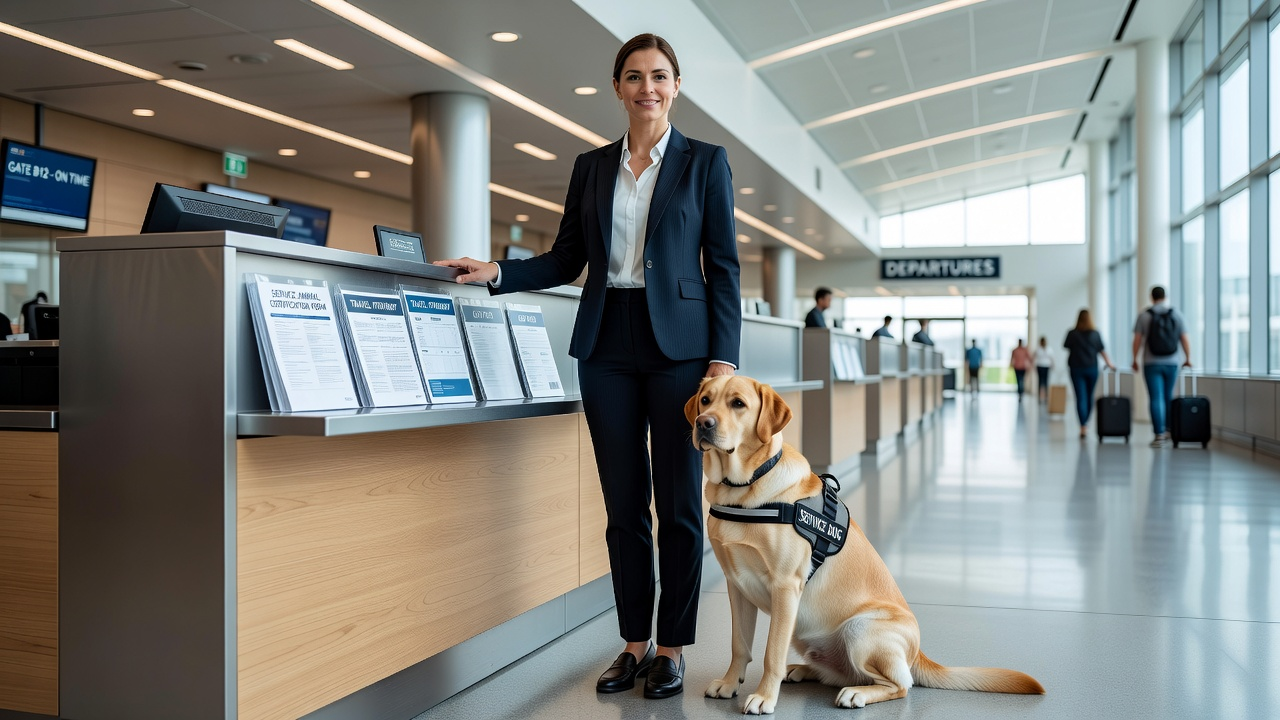
DOT Service Dog Air Travel Rules 2024: Post-2020 Forms, Requirements & Checklist
Picture this: You’re at the gate, heart pounding, your loyal service dog at your side. The boarding agent glances down, form in hand, and asks for paperwork you’ve meticulously prepared. One wrong detail, and your flight could turn into a nightmare. Since the U.S. Department of Transportation’s (DOT) 2020 final rule reshaped DOT service animal air travel, clarity has reigned—but only if you know the ropes. This guide unpacks the post-2020 landscape, from mandatory service dog airline forms to behavior musts, empowering service animal handlers, frequent flyers with disabilities, and travel coordinators to soar stress-free.
The DOT’s Narrow Definition: Dogs Only
Gone are the days of broad interpretations. Under the ADA air travel rules 2020 update, DOT defines service animals strictly as dogs—trained for specific tasks related to a person’s disability. Emotional support animals? Miniature horses? Out. Airlines must accommodate these canine companions in the cabin, no crate required, but only if they meet rigorous standards. This shift slashed in-cabin pets by 90%, prioritizing genuine working dogs.
Service Animal Flight Requirements: Mandatory Forms and 48-Hour Notice
Service Animal Air Transportation Form
At the core are two DOT-mandated forms. The Service Animal Air Transportation Form attests your dog is vaccinated, healthy, trained, and up-to-date on shots. It covers behaviors like not running loose or fouling the cabin. Submit it at least 48 hours before departure—electronically if the airline allows, or in person at check-in.
Relief Attestation Form
For flights over 8 hours, add the Relief Attestation. Confirm your dog can either hold it or relieve itself in a designated area (like a litter box). No form? No boarding. These service dog airline forms are non-negotiable, downloadable from airline sites or DOT’s resources.
Behavior Expectations and Airline Limits
Your dog must behave impeccably—no growling, biting, or excessive noise. Airlines can deny boarding for disruptive animals, even with forms. They can ask for the DOT forms and observe behavior but cannot request health certifications, demonstrations of tasks, or proof beyond the forms. Privacy protected, access assured.
Size and seating? No weight limits, but dogs must fit in the handler’s foot space without encroaching on seats. Bulkhead or extra-legroom rows? Airlines can limit to one per row. Long-haul relief? Potty pads or airline-provided trays save the day.
International Travel: A Patchwork of Rules
Flying abroad? DOT rules apply domestically, but destinations vary. EU nations demand health certificates and rabies titers; Australia quarantines rigorously. Check airline policies and destination regs early—your DOT forms won’t suffice everywhere. Pro tip: Contact embassies for entry requirements.
Actionable DOT Service Animal Air Travel Checklist
- Confirm dog’s DOT eligibility: Task-trained canine only.
- Complete and submit Service Animal Air Transportation Form 48+ hours pre-flight.
- For 8+ hour flights, file Relief Attestation.
- Verify vaccinations and health; carry vet records.
- Practice calm cabin behavior; pack treats, toys, relief aids.
- Research airline seating policies and notify of needs.
- For international: Secure extra docs like rabies certs.
- Arrive early; politely present forms at check-in and gate.
- Know your rights: Airlines can’t demand task demos.
Armed with this, your journey transforms from ordeal to triumph. Wings await—fly confident.
About NAWN: The National Animal Welfare Network (NAWN) is America's species-neutral animal welfare platform — providing lifetime digital registry, lost-pet recovery, foster coordination, wildlife protection, youth education, and career pathways in animal welfare.