
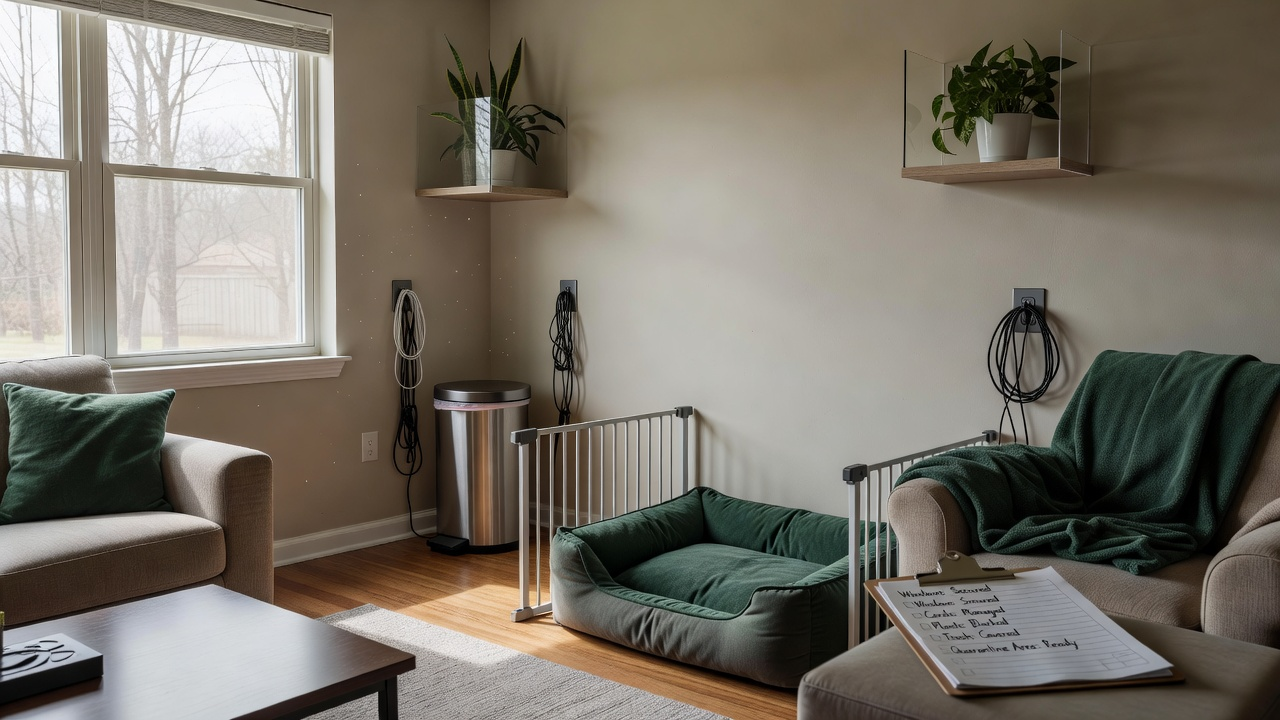
Foster Home Safety Checklist: Room-by-Room Inspection for Ultimate Pet Foster Readiness
Imagine this: Your new foster pet, wide-eyed and wagging (or purring), bounds into your home, only to discover a dangling cord or a tipped trash bin. Heartbreak averted starts with preparation. This foster home safety checklist transforms your space into a sanctuary, room by room. Whether you're a first-time foster or seasoned volunteer, this printable guide ensures foster readiness, minimizing risks for cats, dogs, birds, or small critters. Walk the pet-eye view, check twice, and open your doors confidently.
Whole-Home Essentials: Escape Prevention and Secure Perimeter
Before diving room-by-room, secure the basics. Pets are escape artists—curious noses push gates, paws pry windows. A foster pet room inspection begins here, preventing adventures turned tragedies.
- Doors and windows: Install child-proof locks or latches on all accessible ones. Test for gaps larger than a fist.
- Screen doors/windows: Repair tears; ensure they latch securely against paw pressure.
- Pet-eye-level hazard walk: Crawl or crouch to scan for chewable wires, small objects, or climbable furniture edges.
- Escape-proof gates: Use heavy-duty baby gates for stairs or doorways; no flimsy plastic.
Kitchen: Toxic Traps and Trash Security
Kitchens tempt with crumbs and chemicals. Lock away cleaners and chocolate; secure bins. This foster home safety checklist staple keeps bellies safe.
- Toxic chemicals: Store cleaners, rodenticides, and pest control under sink locks or high cabinets.
- Trash security: Use paw-proof bins with locking lids; empty daily to avoid scavenging.
- Electrical cords: Tuck appliances away; use cord covers or spiral wraps on exposed ones.
- Toxic foods/plants: Relocate onions, grapes, lilies, or pothos to inaccessible spots.
- Counters and appliances: No hot stoves; secure knobs if needed.
Bathrooms and Laundry: Slippery Slopes and Chemical Havens
Toilets beckon for drinks, cabinets hide poisons. Keep doors closed or latched during foster pet stays.
- Medicine cabinets: Lock away meds, shampoos, lotions—toilet paper rolls too!
- Laundry room: Secure washer/dryer doors; store detergents high or locked.
- Bathroom doors: Keep closed; use toilet lid locks if open access.
Living Areas and Bedrooms: Cozy but Cord-Free
Relaxation zones hide chews and climbs. Tape cords, block vents, and scan floors.
- Electrical cord management: Bundle and cover all floor-level cords; unplug unused.
- Furniture stability: Anchor tall pieces to walls against tip-overs.
- Small objects: Remove beads, batteries, rubber bands from reach.
Outdoor Spaces: Fences, Gates, and Yard Perils
Yard freedom demands boundaries. Dig-proof and climb-proof your foster haven.
- Outdoor fence and gate check: No gaps under fences (>2 inches); gates self-latch.
- Yard toxins: Remove antifreeze puddles, toxic plants like azaleas, fertilizers.
- Supervised access only: No unsupervised outdoor time until fully assessed.
Dedicated Quarantine Room: Isolation for Health
New fosters need a safe intro space. Equip a quiet room with essentials, applying all prior checks.
- Select easy-clean space: Bathroom or spare room with washable floors.
- Stock supplies: Crate, bedding, food/water bowls, litter box, toys—all safe.
- Vet check first: Quarantine until cleared; disinfect thoroughly.
Print, check off, repeat seasonally. Your diligence turns a house into a haven, giving fosters the fresh start they deserve.
About NAWN: The National Animal Welfare Network (NAWN) is America's species-neutral animal welfare platform — providing lifetime digital registry, lost-pet recovery, foster coordination, wildlife protection, youth education, and career pathways in animal welfare.