
Missing Sanctuary Animals: Ultimate Prevention Protocols & Loose Livestock Recovery Guide
Picture this: dawn breaks over your sanctuary, mist curling from dew-kissed pastures, when a volunteer’s shout pierces the quiet—“The goats are out!” Hearts race, routines shatter. In the world of animal sanctuaries, a loose resident isn’t just an escape; it’s a test of preparation, teamwork, and resolve. For caregivers, barn managers, volunteer coordinators, and rescue teams, having a rock-solid missing sanctuary animal protocol can turn panic into precision. Drawing from proven guidance like the Open Sanctuary Project’s policies for missing residents, this guide equips you with farm animal escape prevention strategies and loose livestock recovery steps. It’s practical wisdom, not legal or veterinary advice, to safeguard your residents and your peace of mind.
Fortify Your Defenses: Farm Animal Escape Prevention Essentials
Prevention beats cure every time, especially when a single loose latch can unleash chaos. Start with perimeter vigilance. Daily walks along fences reveal weak spots—sagging wires, burrowed gaps, or storm-damaged posts. Post-construction or after high winds, conduct thorough inspections: check every gate latch, ensuring self-closing mechanisms engage fully. Pigs root under barriers; goats leap them. Tailor heights and reinforcements to species: 5-foot woven wire for sheep, electric strands for deer-prone areas.
Identification: Your First Line of Traceability
No resident should vanish into anonymity. Equip each with permanent ID suited to their kind—microchips for pigs and goats, leg bands for chickens, ear tags for cattle. Snap clear photos capturing distinguishing features: that white blaze on a black steer, the floppy ear on a potbelly pig. Create a “cover sheet” for each: photo, ID details, behavior notes. Integrate with the NAWN registry for privacy-safe QR codes, linking to verified care staff profiles. Scan a code, and recovery networks activate instantly.
Routine drills embed these habits. Weekly ID checks during feeding ensure nothing’s lost. This isn’t bureaucracy; it’s the thread that pulls wanderers home.
Act Swiftly: The Core Missing Sanctuary Animal Protocol
Discovery hits like a thunderclap. Pause. Secure the site: close all gates, note the time and last sighting. Alert your core team via a pre-set chain—designated leader, searchers, communicator. Species behavior guides your hunt. Chickens flock uphill or into brush; pigs burrow nearby; cows circle back to herd mates; equines seek water or open fields. Ducks hug ponds; turkeys roost high.
Search Zones: Methodical Loose Livestock Recovery
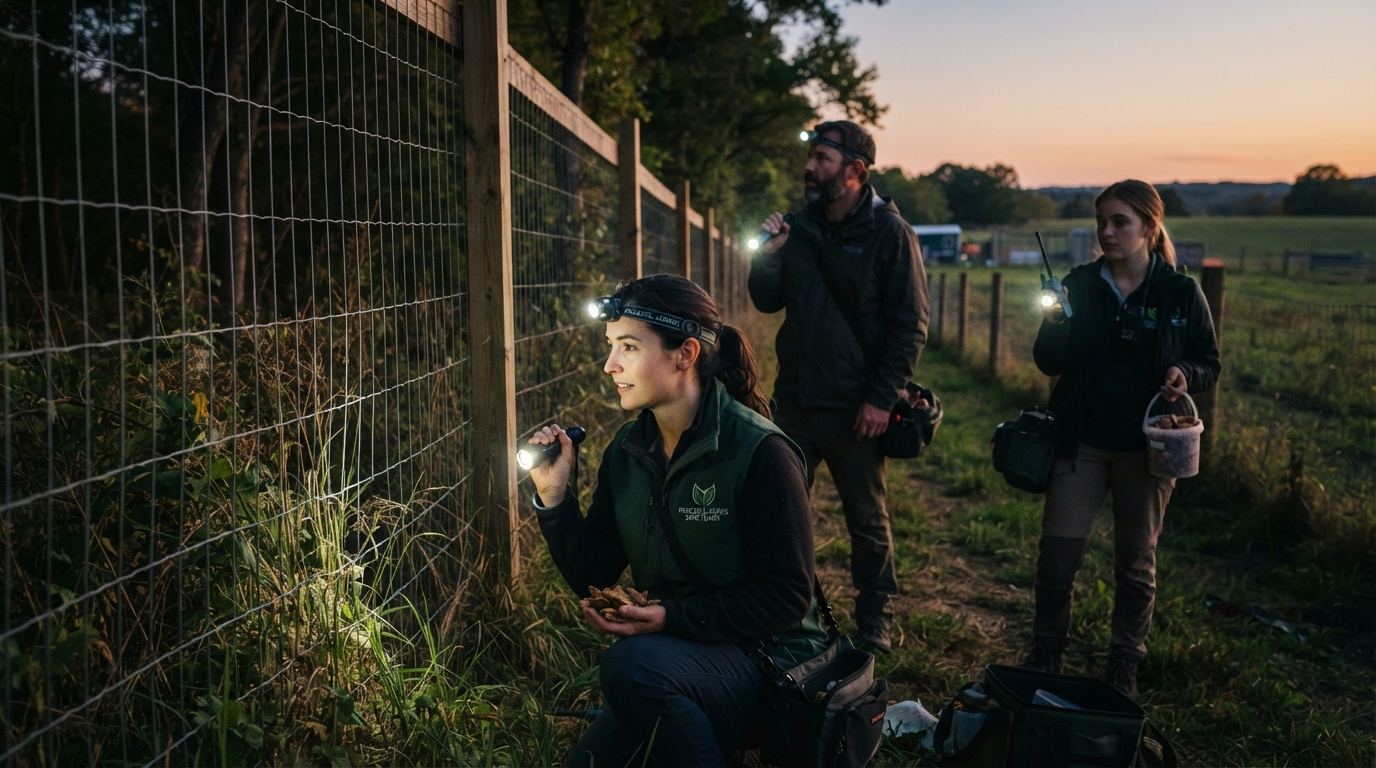
Divide and conquer with mapped zones. Begin tight: scour barns, sheds, under trailers. Expand to adjacent pastures—check with social groups, as escapees often rejoin kin. Perimeter sweep next: fences, ditches, wooded edges. Then neighborhood: roadsides, neighbors’ yards. Radius grows hourly, mapped on paper or apps. Assign roles crisply:
- Gate manager: Controls access, prevents further escapes.
- Treat carrier: Bears favorites—alfalfa for goats, grain for pigs.
- Observer/communicator: Logs sightings, coordinates via radio or group chat.
Move slow, voices low. No chasing—stressed animals bolt farther.
Engage Wisely: Public Messaging and Responder Safety
Crafting the Right Call-Out
After 30-60 minutes without luck, loop in neighbors—door-to-door or community posts. Use a template: “Lost [species], [name/color/markings], friendly but shy. Last seen [location/time]. Call [number]—do NOT chase.” Notify animal control only if risks loom, like highways. Warn against pursuits; share your QR-linked NAWN report for seamless verification.
Safety Above All
PPE is non-negotiable: sturdy boots, gloves, long sleeves against scratches or zoonotics. Approach large animals like cattle calmly—never corner, as they charge when trapped. Smaller escapees? Let them lead. Wildlife lurks: scan for predators drawing escapees into danger. Skip harmful deterrents; focus on humane draws.
Lures, Wildlife, and the Home Stretch
Tempt with trust. Familiar caregivers call softly; herd mates visible from safe distance lure loners. Swing the nearest gate inward—many self-return. Scatter familiar feed trails. Nightfall? Set live traps baited with favorites, checked hourly.
Wildlife awareness sharpens tactics: coyotes spook goats toward roads; owls scatter poultry. Patrol edges at dusk.
Document and Evolve: After-Action Mastery
Log relentlessly: timeline, sightings, actions, contacts, resolution. Post-recovery, dissect: root cause (faulty gate?)? Repair immediately. Update protocols—drill monthly. NAWN’s lost pet workflow streamlines reports: upload photo/ID, verify staff, broadcast securely. It’s your networked safety net.
Quick-Reference Checklist
- Secure site, note time/location.
- Alert team, assign roles.
- ID check: microchip/tag/QR.
- Search zones: close-in to expanding.
- Lures: familiar voices/feed.
- Public template if needed—no chase.
- Safety: PPE, calm moves.
- Log all; review post-event.
Publication/Review Date: October 2024
Protocols evolve—check Open Sanctuary Project for updates.
About NAWN: The North American Wildlife Network connects sanctuaries with cutting-edge tools like QR registries for faster, privacy-focused recoveries. Join to amplify your safeguards.