
Mountain West Pet Safety Guide: Wildfire Evacuations, Flash Floods, Rattlesnakes & Extreme Heat Survival Tips
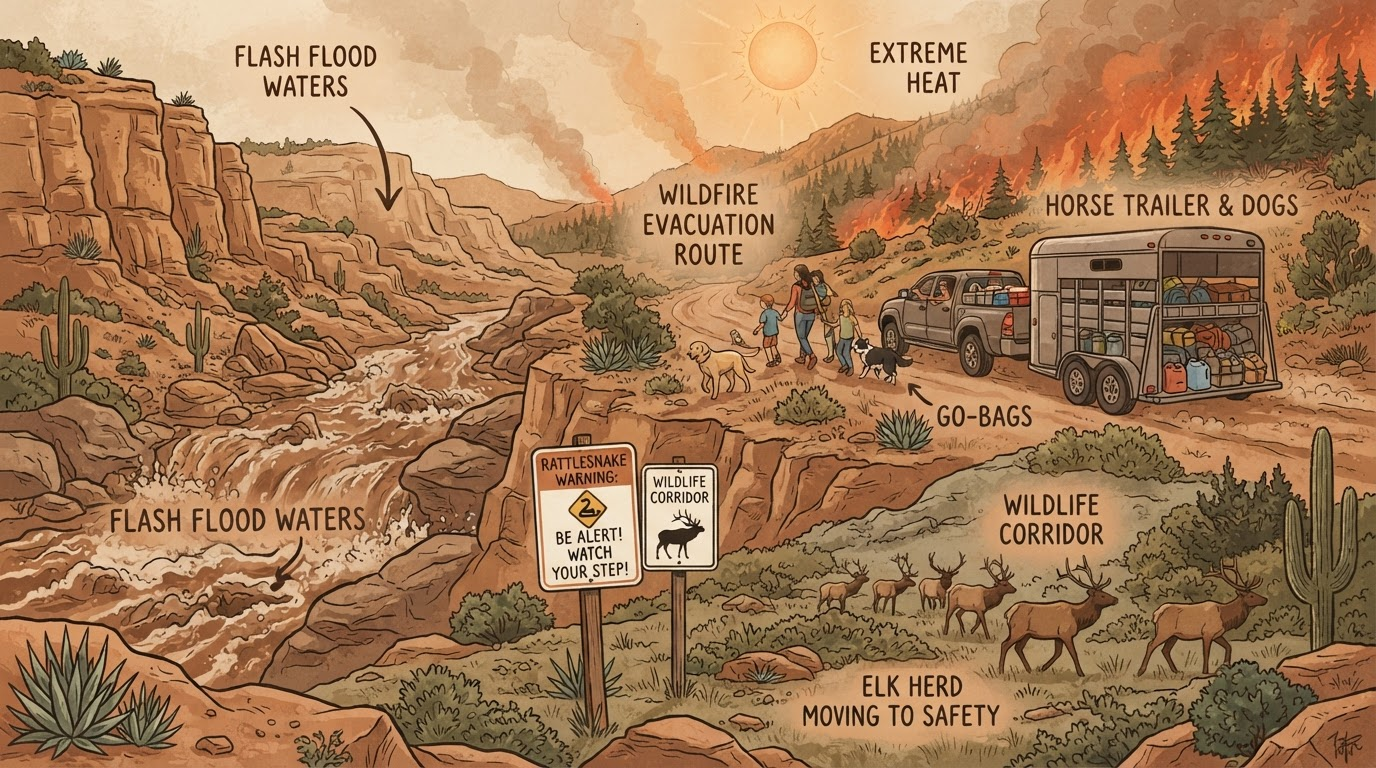
Imagine a lazy afternoon hike in the red rock canyons of southern Utah, your dog splashing in a shallow wash, when thunder rumbles distantly. Minutes later, a wall of water roars down the arroyo, turning paradise into peril. Or picture the acrid smoke curling over your Colorado ranch as flames leap a ridgeline, giving you just 10 minutes to load horses and pets before evacuation orders hit. In the Mountain West—spanning Colorado, Utah, New Mexico, Arizona, Nevada, Idaho, Montana, and Wyoming—these aren't rare disasters. They're the desert's speed threats: wildfires that ignite in drought-parched grasslands and flash floods that surge without warning in slot canyons and washes.
For pet owners, horse owners, hikers, and ranchers here, wildfire flash flood pet readiness Mountain West isn't optional—it's survival. This guide arms you with practical strategies for rapid evacuations, arroyo flood avoidance, scorching heat defense, rattlesnake encounters, and navigating wildlife corridors amid fire season and drought. Your animals depend on your preparation.
Rapid Wildfire Evacuation: When You Have Just 10 Minutes
Wildfires in the Mountain West move fast, fueled by high winds and bone-dry fuels. In 2023 alone, blazes scorched over 2 million acres across these states, forcing thousands into hasty evacuations. You might spot smoke at noon and face mandatory orders by evening. Pets and horses complicate matters—panicked animals bolt, trailers jam, and traffic clogs escape routes.
Prep starts now. Designate a "go bag" for each animal: leashes, carriers, meds, food for 72 hours, medical records, and photos for reuniting if separated. Park your trailer hitched near the barn. Map multiple evacuation routes, accounting for wildlife corridors where fleeing deer and elk funnel flames.
Rapid Evacuation Checklist
- Load pets into carriers or vehicles first—dogs crated, cats secured, small animals in ventilated boxes.
- Tether horses loosely near trailers; use calming supplements if pre-approved by your vet.
- Grab go bags, shut off gas/water, close windows/doors to slow fire spread.
- Evacuate livestock last if time allows—release into pastures away from structures if trailers fail.
- Notify neighbors and animal shelters of your pets' needs; have boarding pre-arranged 50+ miles away.
- Drive calmly; turn on hazard lights and tune to local fire updates.
Practice this drill monthly. In Wyoming's 2022 Haymaker Fire, ranchers who did saved 80% of their herds.
Flash Floods in Arroyos, Slot Canyons, and Washes: Deadly Deceptions
Monsoon rains turn dry desert channels into killers. In Arizona's slot canyons, flash floods claim lives yearly; pets drown leashed to immovable points or swept from campsites. Never camp in washes—water rises 20 feet in seconds from storms miles away.
Hikers in New Mexico's arroyos: Check weather upstream via apps like NOAA. Keep pets leashed short but secure; avoid crossing flowing water deeper than ankle-high for you (knee-high for dogs). In Nevada's basins, respect "Do Not Enter When Raining" signs at canyon mouths.
Desert pet safety means knowing the signs: rising debris, muddy water color, thunder echoes. Climb to high ground immediately—horses can swim but tire fast. Post-flood, watch for contaminants harming paws and bellies.
Extreme Heat Protection: Beat the Scorch
Summer temps soar past 110°F in Arizona and Nevada valleys, with nights barely cooling. Asphalt hits 140°F, blistering paws; horses colic from heat stress. Extreme heat pets vulnerability peaks in low humidity—dehydration sneaks up.
Test pavement with your hand: If too hot for 5 seconds, it's unsafe. Hydrate relentlessly—add ice to bowls, electrolyte pastes for horses. Cool barns with misters, deep bedding, and fans; never leave pets in vehicles.
Extreme Heat Safety Checklist
- Walk on grass or at dawn/dusk; boot paws for hikes.
- Freeze wet bandanas around necks; offer shaded kiddie pools.
- Monitor for panting, drooling, lethargy—cool with 70°F water rubs, seek vet for seizures.
- Barn hacks: Open vents, wet down roofs, provide salt blocks.
- Horses: Hose legs hourly, sponge alcohol-diluted water on veins.
Rattlesnake Season & Wildlife Encounters: Stay Safe
Spring through fall, rattlesnake encounters spike in Utah foothills and Idaho trails. Venomous bites swell pets' faces; scorpions sting paws. Coyotes eye small dogs, bears raid ranch feed in Montana droughts.
Discuss rattlesnake vaccines with your vet—effective in high-risk areas like Arizona. Train pets with aversion therapy: Shake cans mimic buzz, redirect attention.
Actionable Wildlife Encounter Guide
- Rattlesnakes: Freeze, back away slowly. If bitten, immobilize limb, ID snake photo, rush to vet—no tourniquets or ice.
- Scorpions: Shake off bedding nightly; paw inspections post-hike.
- Coyotes: Haze with noise/sticks; keep pets close, secure trash.
- Bears: Travel in groups, bear spray ready; make noise on trails.
Survival rate post-bite? Over 90% with prompt care.
Wildlife Corridors During Fire Season & Drought Impacts
Fires push wildlife into wildlife corridor wildfire paths—mountain passes and river valleys—altering migration. Drought wildlife patterns shift: Deer invade suburbs, predators follow pets. In Colorado's fire corridors, expect elk herds blocking roads; yield right-of-way.
Ranchers in Wyoming: Fence gaps for safe passage reduce entanglements. Hikers: Apps like GAIA GPS mark corridors—avoid peak hours. Drought wildlife means skittish animals; secure feed to prevent bear habituation.
Stay Prepared with NAWN
North American Wildlife Network (NAWN) champions coexistence in wild places, delivering real-time alerts on fires, floods, and wildlife movements across the Mountain West. From interactive maps to vet-vetted checklists, NAWN equips you to protect pets amid nature's fury. Sign up for updates—because informed guardians save lives.
The wild calls, but safety first. Gear up, stay vigilant, and adventure on with your companions secure.