
Ultimate Guide to Permanent Animal Records for Sanctuaries: Essential Documentation and Best Practices
Imagine a quiet sanctuary morning shattered by an urgent call: a long-term resident shows sudden distress. Your team springs into action, but amid the chaos, one question looms—where's the full medical history? In that split second, comprehensive sanctuary animal records become the lifeline between confusion and confident care. For sanctuary administrators, rescue record keepers, foster programs, and shelter staff, permanent resident records aren't just paperwork; they're the unbreakable backbone of compassionate, accountable animal welfare.
This guide draws from proven resources like The Open Sanctuary Project's Animal Database and their Compassionate Care guides, offering a roadmap to build robust permanent resident records. Note: This is educational content only, not legal, veterinary, or professional advice. Always consult experts for your operations.
Why Robust Animal Shelter Documentation is Non-Negotiable
Picture a chain of care stretching years into the past—a surrendered animal arrives malnourished, its history a patchwork of unknowns. Meticulous animal shelter documentation closes those gaps, tracking every milestone from intake to sunset years. It safeguards against liability, supports Global Federation of Animal Sanctuaries (GFAS) accreditation, and ensures seamless handoffs during emergencies or adoptions.
Beyond compliance, these records honor each life. They reveal patterns: a recurring limp tied to an old injury, or dietary tweaks that spark vitality. In sanctuaries where residents may live decades, rescue record keeping evolves from routine to revelation, turning data into deeper empathy.
Core Components of Permanent Resident Records
Identity: The Foundation of Every Record
Start with unshakeable identifiers: name (or ID number), species, breed (if known), sex, date of birth or estimated age, microchip/tattoo numbers, clear photos from multiple angles, and distinguishing marks like scars or unique coat patterns. These anchor all future entries, preventing mix-ups in multi-species havens.
Provenance and Ownership History
Document previous guardians, surrender forms, transfer of guardianship papers, and Certificates of Veterinary Inspection (CVI) for transports. This chain-of-title proves legal custody, vital for audits or disputes.
Intake Essentials
Capture initial health exams, condition photos (body score, wounds), and behavior baselines—fearful? Affectionate? These snapshots set the care trajectory.
Medical and Treatment History
Log exams, diagnostics, surgeries, lab results, pathology reports, immunizations, and parasite protocols. For medications, maintain controlled substance logs with dosages, durations, and prescribing vets. Species-neutral tracking ensures tailored interventions, like monitoring for age-related declines.
Behavior, Diet, and Housing Logs
Note social needs, handling preferences, incidents. Track species-specific diets, allergies, supplements. Housing logs detail enclosures, enrichments, and movements—essential for welfare assessments.
Incidents, Transfers, and End-of-Life
Record all observations or events. For transfers/adoptions, bundle records. End-of-life docs include decisions, necropsy findings if performed—closing the circle with dignity.
Best Practices for Rescue Record Keeping
Permissions and access control are paramount: define who views/edits (admins only for meds?), enforce confidentiality. Retain permanent resident records indefinitely per Open Sanctuary guidance—unlike 7-year financial docs. Store physical copies cool, dry, secure; digitize with backups (cloud + external drives).
Audit trails, GFAS-aligned, timestamp changes for transparency. Regular reviews catch gaps, like missing vaccine boosters.
Permanent Resident Records Checklist: Your Cover Sheet Essential
| Category | Key Documents/Fields | Status |
|---|---|---|
| Identity | Name, species, microchip, photos | |
| Provenance | Surrender forms, CVI | |
| Intake/Medical | Health check, vaccines, meds log | |
| Behavior/Diet/Housing | Logs, allergies, incidents | |
| End-of-Life/Transfers | Necropsy, adoption packets | |
| Backups/Audits | Digital vault, access logs |
Print this for every file—tick as complete for instant audits.
Elevate with Digital Tools: NAWN Registry Integration
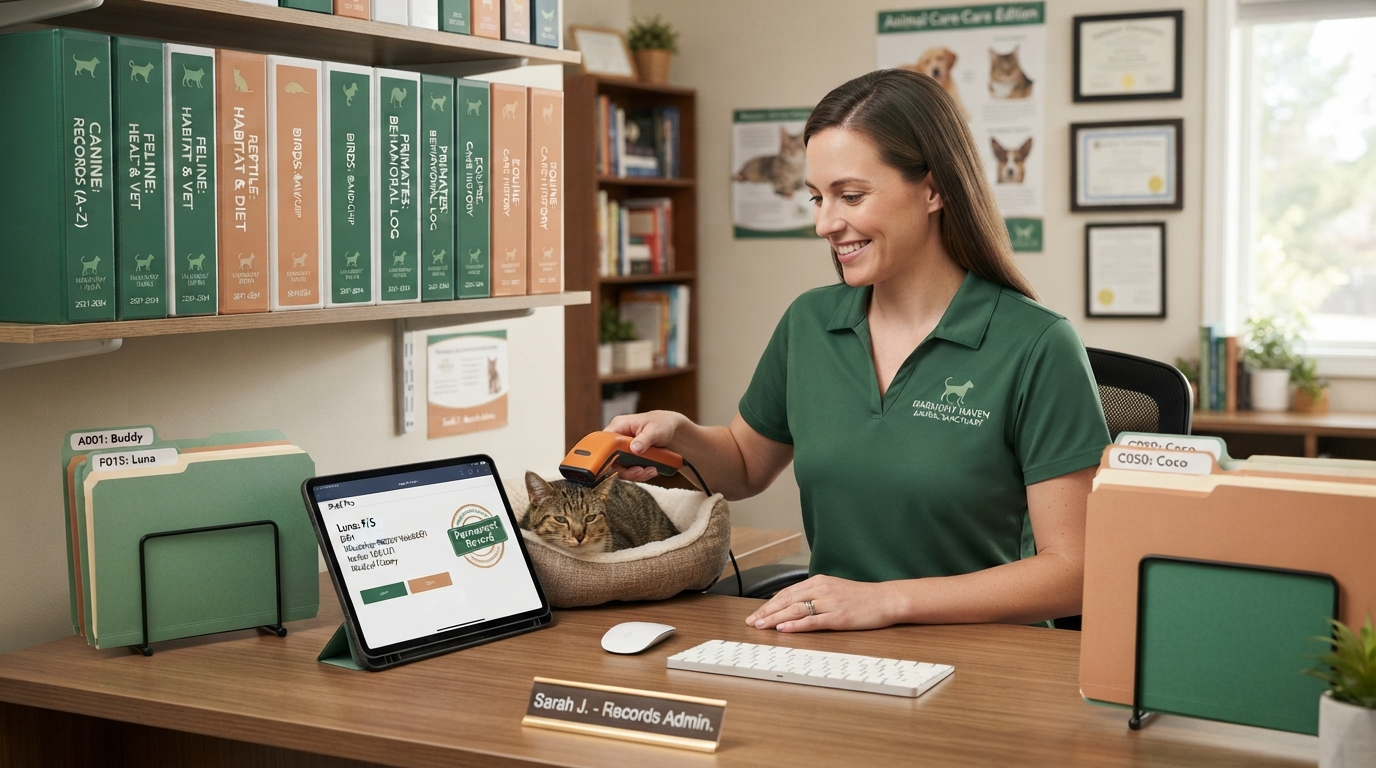
Modern sanctuary animal records thrive digitally. Platforms like the NAWN registry offer secure vaults for chain-of-title docs, QR codes linking to private care records for quick recovery—even in disasters. Pair with Open Sanctuary templates for hybrid systems: paper for fieldwork, digital for eternity.
Charting the Path Forward
Permanent records transform sanctuaries from reactive outposts to proactive guardians. They weave individual stories into institutional wisdom, ensuring no life fades undocumented. Implement today: audit one file, build the habit, watch welfare soar.
Publication/Review Date: October 2024
About NAWN
NAWN (North American Animal Welfare Network) empowers sanctuaries with tools for transparent, lifelong care—from registries to resources—uniting rescuers in the mission to protect every resident.