
Ultimate Tornado Pet Safety Guide for Midwest & Tornado Alley: Protect Pets, Livestock & Wildlife
In Tornado Alley—stretching across Oklahoma, Kansas, Nebraska, Iowa, Missouri, Illinois, Indiana, and Ohio—seconds can mean survival. Picture this: the sky bruises to an unnatural green, winds howl like freight trains, and your loyal companion freezes at the first wail of the siren. For pet owners and farmers here, severe storms aren't abstract threats; they're annual reckonings. This ultimate tornado pet safety guide for the Midwest arms you with proven strategies to shield pets, livestock, and even displaced wildlife. From storm shelter pets protocols to livestock protection during tornadoes, we'll cover it all with actionable steps tailored to our volatile heartland.
Tornado Sheltering With Pets: Your Safe Room Blueprint
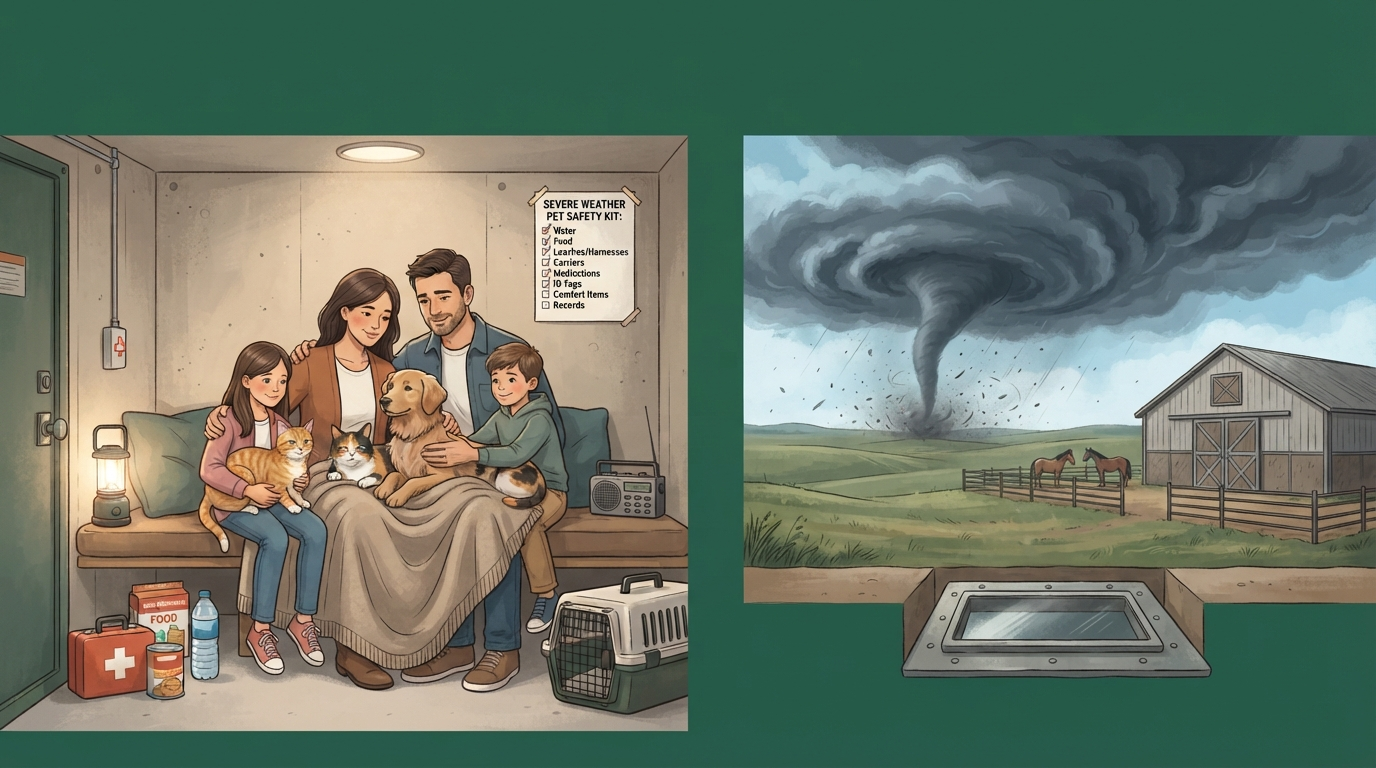
When the National Weather Service issues a tornado warning, every moment counts for tornado pet safety in the Midwest. Designate a safe room now—ideally an interior basement space without windows, or a reinforced bathroom on the lowest floor. Stock it with essentials: sturdy leashes, carriers sized for quick entry, and 72 hours of food, water, and meds.
Practice the protocol: At the first alert, leash indoor pets immediately to prevent panic dashes. For cats or small animals, secure in carriers; larger dogs might need a heavy blanket over their crate for calm. Basements offer superior protection, but if flooding risks your area, opt for a ground-floor interior room with a mattress overhead for debris shield. Never tether animals outside—flying objects turn pens into death traps.
Storm Shelter Checklist for Pets
- Leashes, collars with ID, and carriers tested for fit—do a drill weekly.
- Water bowls and gallon jugs (one gallon per pet/day for three days).
- Impervious food storage, medications, and first-aid kit (bandages, antiseptic).
- Flashlights, batteries, and battery-powered radio for updates.
- Comfort items: familiar toys, blankets to muffle thunder.
- Microchip info printed; update tags with current phone.
- Plastic sheeting and tape for any window exposure.
- Post-storm plan: vet contacts and neighbor check-in.
Severe Thunderstorms & Straight-Line Winds: Safeguarding Outdoor Animals
Not every roar signals a twister—straight-line winds from severe thunderstorms clock 60+ mph, toppling trees and fences across Iowa fields or Missouri pastures. For severe storm animal safety, move outdoor pets indoors at watch level. Secure loose items that could become projectiles; chain-link runs buckle under gusts.
Horses in open paddocks? Bring to the barn's safest corner, away from doors. Chickens or goats huddle low, but winds shred coops—reinforce with sandbags. Monitor radar apps; winds often precede rotation, giving precious minutes to act.
Outdoor-to-Indoor Transition Plan for Pets Who Live Outside
Many Midwest farms house dogs in kennels or cats in barns—until storm season. Build familiarity with indoor spaces gradually: short visits with treats build positive links. Install baby gates for semi-secure zones if full access overwhelms.
Train recall commands amid wind noise using fans. For feral barn cats, provide sturdy carriers baited near safe rooms. Post-storm, watch for stress: pacing signals need for quiet recovery. This transition isn't just practical; it's a bond deepened by shared safety.
Livestock Emergency Plan: Balancing Shelter and Release
Livestock protection during tornadoes demands tough calls. Barns offer wind block but collapse risks; low valleys flood fast. Experts weigh early release versus shelter-in-place: for cattle or hogs, open gates to high ground pre-storm if rotation nears.
Horses fare better loose in pastures—they evade debris instinctively. ID every animal: ear tags, brands, or GPS collars. Secure hay bales low; ventilate barns to fight heat post-power loss. Nebraska ranchers swear by community networks—neighbor watches mean faster post-storm headcounts. Plan evac routes; trailers ready with fuel.
- Map high ground and vet triage spots.
- Stock electrolytes for dehydration.
- Document health records digitally and printed.
- Practice loading under duress.
River Valley Flooding After Storms: Hidden Midwest Menace
Illinois and Ohio river valleys turn treacherous post-tornado—flash floods swell creeks overnight. Elevate feed above flood lines; never cross moving water with animals. For pets, portable pens on hills; livestock to ridges. Monitor USGS gauges; evacuate at minor flood stage.
Contaminated water breeds leptospirosis—provide clean sources. Aftermath patrols spot stranded animals; ropes and boats save lives.
Displaced Wildlife After Tornadoes: Compassionate Response
Tornadoes scatter wildlife—owls from shattered nests, fawns in debris piles. Observe first: most rebound. Injured? Contain humanely with boxes, no bare hands for rabies risk. Nesting birds grounded? Shallow boxes mimic trees.
Kansas prairies host displaced coyotes raiding farms—secure gates. Rehab centers like those in Oklahoma await calls; transport gently. Debris hides nests—slow cleanup saves lives. Your vigilance aids ecosystem recovery.
At NAWN, we're passionate about safeguarding North American wildlife and domestic animals through education and action. From tornado pet safety in the Midwest to broader conservation, our resources empower you to protect what matters most. Stay prepared, stay safe.