
3Rs in Animal Shelters: Replace Euthanasia, Reduce Stays, Refine Welfare with Proven Strategies
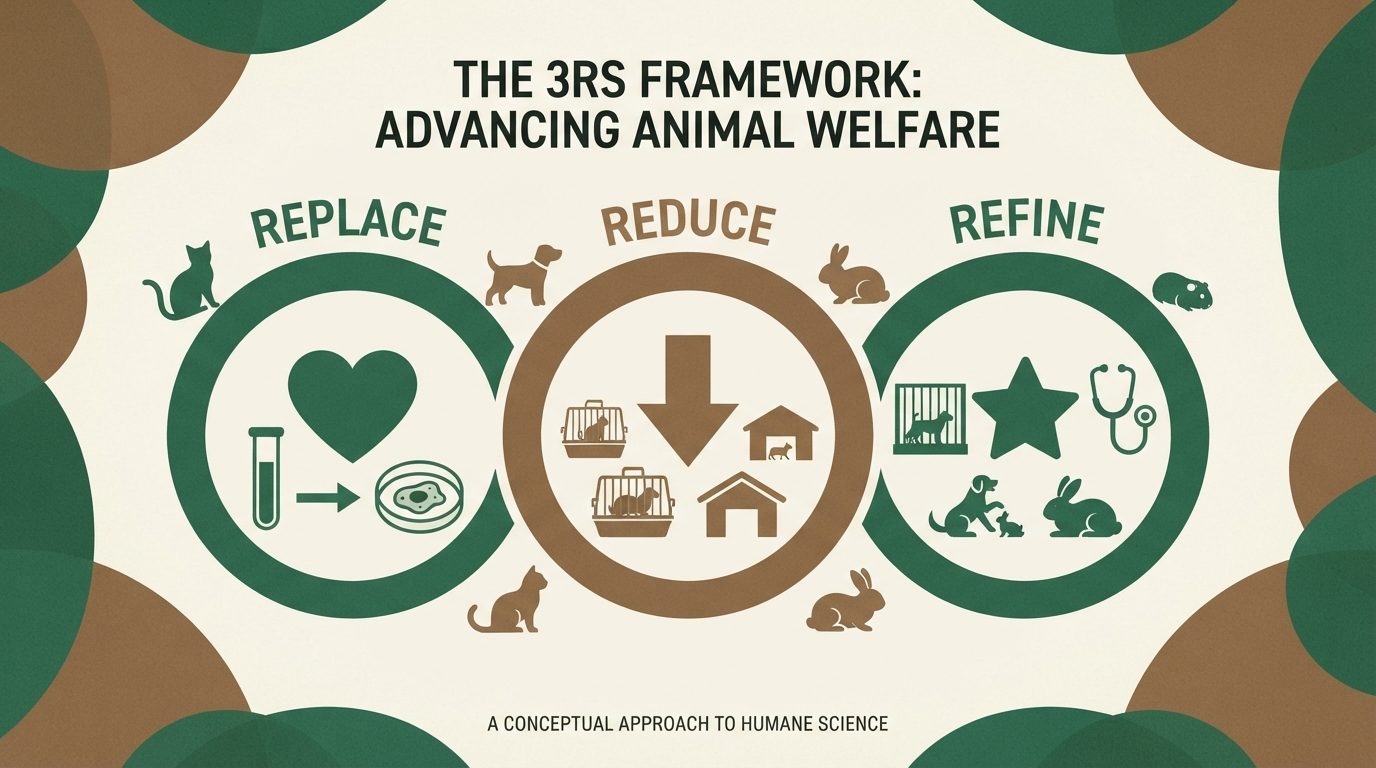
Picture this: a bustling shelter where a feisty terrier mix, once flagged for behavioral euthanasia, now wags its tail in a forever home after targeted training. Or a pair of nervous rabbits, their stay shortened from weeks to days via foster-to-adopt magic. This isn't a dream—it's the power of the 3Rs in animal welfare, repurposed for shelters. Originally coined by William Russell and Rex Burch in 1959, the 3Rs—Replacement, Reduction, and Refinement—have revolutionized lab animal ethics, as documented by the Animal Welfare Information Center (AWIC). Today, they're transforming shelters, offering 3Rs animal welfare strategies that slash euthanasia rates, speed adoptions, and elevate daily life for cats, dogs, birds, small mammals, and reptiles alike.
The Roots of Replace, Reduce, Refine: From Labs to Shelters
Russell and Burch's framework emerged from a mid-20th-century push to minimize animal suffering in research. AWIC resources highlight how Replacement swaps animals for models like cell cultures; Reduction cuts animal numbers through better stats; Refinement tweaks procedures for less pain. In shelters, we adapt these principles to urgent realities: overcrowding, behavior challenges, and finite resources. No longer confined to labs, Replace Reduce Refine now guides shelter alternatives to euthanasia, proving that compassion scales with strategy.
Why now? Shelters face mounting pressures—strays, owner surrenders, seasonal influxes. Yet data shows 3Rs implementation can drop euthanasia by up to 90% in progressive facilities, per AWIC-inspired programs. Let's break it down, R by R.
Replacement: Swapping Euthanasia for Second Chances
Behavioral Rehab Over the Needle
Replacement shines brightest against behavioral euthanasia, the heartbreaking default for fear-aggressive dogs or litter-box avoidant cats. Instead, deploy targeted interventions. Train staff in force-free behavior modification: counter-conditioning for a parrot's biting, desensitization for a hamster's handling aversion. AWIC cites protocols adaptable here—think clicker training for reptiles or scent games for rabbits.
Real-world pivot: A shelter assesses incoming ferrets with play-style tests, channeling high-energy nips into puzzle toys. Result? Adoptions soar, needles stay holstered. Build assessment teams blending vets, trainers, and fosters for holistic evals, ensuring only untreatable cases proceed—a true shelter alternative to euthanasia.
Reduction: Shortening Stays, Maximizing Matches
Foster-to-Adopt and Data-Driven Efficiency
Reduction targets length of stay (LOS), that silent killer of space and sanity. Efficient matching via foster to adopt programs moves guinea pigs to trial homes in 48 hours, not weeks. Integrate registries like NAWN's to scan for owners—imagine reuniting a lost cockatiel before it bonds to kennel walls.
- Speed photo uploads and AI-matching for adopters.
- Host micro-events: reptile speed-dating or small mammal mixers.
- Leverage foster networks for species-neutral overflow, from budgies to bearded dragons.
AWIC's statistical tools inspire shelter dashboards tracking LOS trends, slashing averages from 21 to 7 days. Fewer days means less stress, more lives saved.
Refinement: Elevating Every Moment in Care
Enrichment Protocols and Low-Stress Living
Refinement polishes welfare during stays, via enrichment protocols. Dogs get snuffle mats; rats, tunnel mazes; birds, foraging kabobs. Low-stress handling—gentle towels for chinchillas, covered crates for finches—cuts cortisol spikes, per AWIC pain-assessment guides.
Medical tweaks: Preemptive pain management for injured turtles, species-specific diets for hedgehogs. Rotate environments: swap a snake's hideouts weekly to mimic wild novelty. These aren't luxuries; they're ethical imperatives that boost adoptability—calmer animals equal quicker homes.
Cultivating a 3Rs Culture: From Policy to Practice
Embed 3Rs organization-wide. Start with AWIC training modules, tailored for staff. Form cross-species committees auditing protocols quarterly. Celebrate wins: monthly 3Rs spotlights on a rehabbed iguana or foster success story.
NAWN's registry data supercharges this—track outcomes across dogs to doves, refining Reduction strategies with reunion stats, predicting peak LOS for small mammals. Partners report 30% faster placements via such insights.
Your 3Rs Implementation Checklist
- Assess: Map current euthanasia/LOS/welfare baselines.
- Train: Roll out Replace Reduce Refine workshops, AWIC-sourced.
- Equip: Stock enrichment protocols for all species.
- Partner: Activate foster to adopt and registries.
- Measure: Quarterly reviews, tweak relentlessly.
- Scale: Share successes network-wide.
A New Era of Shelter Excellence
The 3Rs aren't a checklist—they're a mindset shift, turning shelters into welfare powerhouses. From Russell and Burch's vision to your kennels, these strategies prove 3Rs animal welfare saves lives across species. Embrace them, and watch euthanasia fade, stays shrink, welfare soar.
About NAWN: The National Animal Welfare Network (NAWN) is America's species-neutral animal welfare platform — providing lifetime digital registry, lost-pet recovery, foster coordination, wildlife protection, youth education, and career pathways in animal welfare.