
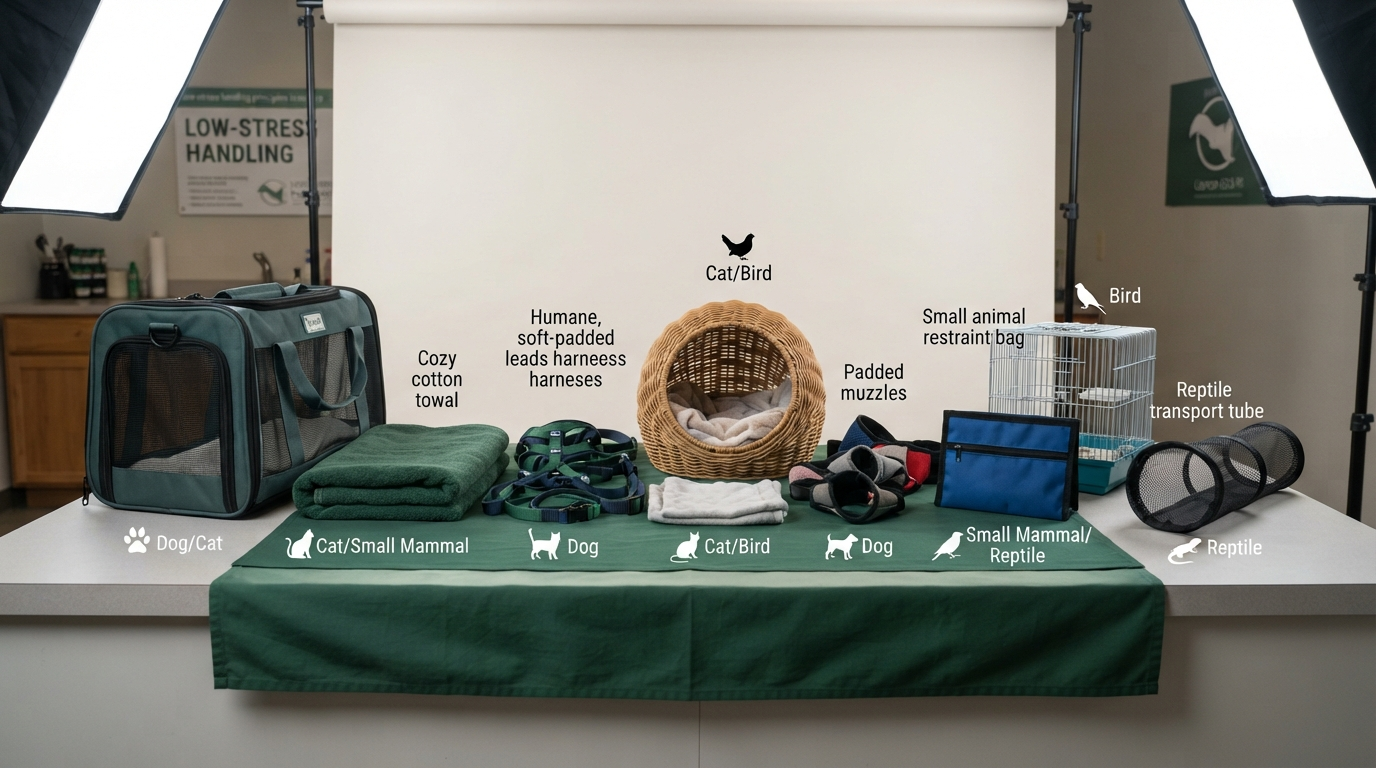
Low-Stress Humane Handling Guide: AWIC Principles, Fear Free Certification & Safe Animal Transport
Picture this: a shelter dog, ears pinned back, body low to the ground, eyes darting for escape. One wrong move, and trust shatters. But with low-stress handling techniques rooted in AWIC humane handling principles, that same dog relaxes under your calm touch. For animal control officers, shelter handlers, transport volunteers, and foster families, mastering these methods isn't just best practice—it's a game-changer for animal welfare and your safety.
Drawing from the Animal Welfare Information Center (AWIC) under the USDA, this guide unpacks humane restraint, species-specific strategies, and animal transport safety. Whether wrangling a hissing cat or securing a bird for travel, low-stress handling minimizes fear, reduces injury risk, and builds resilience in vulnerable animals.
AWIC Principles: The Foundation of Humane Handling
The AWIC emphasizes five core principles for low-stress handling: minimize pain and distress, use the least restraint necessary, respect species-specific needs, ensure competent personnel, and maintain sanitary conditions. These guidelines, detailed in AWIC's resources on animal care and handling, align with USDA standards to prevent suffering during capture, transport, and sheltering.
Humane restraint starts with observation. Approach slowly, speak softly, and avoid direct stares that trigger flight responses. AWIC stresses that force escalates fear—opt for patience over power. This philosophy underpins every technique, ensuring animals feel secure rather than cornered.
Decoding Animal Behavior and Fear Responses
Animals don't "misbehave"—they communicate. Fear manifests as freezing, fleeing, or fighting. Dogs may whale-eye (whites showing), cats flatten ears, birds fluff feathers, and reptiles hiss or inflate. Recognizing these cues allows proactive low-stress handling.
Calm energy is contagious. Lower your posture, breathe steadily, and let the animal set the pace. Tools like barriers or distractions redirect focus without confrontation, turning potential chaos into cooperation.
Low-Stress Handling Techniques by Species
Dogs: Slip Leads and Sandwiching
For dogs, use a slip lead looped loosely over the head and shoulders. Employ the "sandwich" method: two handlers approach from sides, guiding without crowding. Reward calm with treats tossed at a distance.
Cats: Towel Wraps and Carrier Lures
Cats thrive on burrito-style towel wraps—scoop from behind, bundle gently. Lure into carriers with food or toys, never forcing. Dim lights reduce stress.
Small Mammals, Birds, and Reptiles
- Small Mammals: Use tunnels or boxes for self-entry; gloves for hamsters to prevent bites.
- Birds: Cover cages first, then use soft nets or towels over the body to immobilize wings safely.
- Reptiles: Support the body fully, avoid tails; use clear tubs for scooping.
Across species, AWIC humane handling prioritizes minimal contact time and positive associations.
Equipment Essentials for Humane Restraint
Stock smart: adjustable leads for dogs, airline-approved carriers for cats and small animals, basket muzzles that allow panting, and towels for wraps. Catch poles? Last resort only, per AWIC guidelines—release pressure immediately upon control.
Rabies poles for distance, but pair with sedation consultations. Proper fit prevents injury; inspect gear daily.
Animal Transport Safety: From Pickup to Drop-Off
Secure crates with bungees in vehicles, away from airbags. Maintain 65-75°F with ventilation—no direct AC blasts. Cover carriers to block visuals, reducing anxiety. Stop every 2 hours for checks: water, waste, signs of distress.
AWIC transport protocols demand non-slip floors, dividers for multiples, and biosecure covers. These steps ensure animal transport safety, preventing escapes or heatstroke.
Handling Fearful, Aggressive Animals: Staff Safety First
Fearful animals bite out of panic; aggressives defend territory. Use barriers, CO2 distractions, or break sticks. Team up: one distracts, others restrain. Personal protective gear—kevlar sleeves, face shields—is non-negotiable.
Chemical restraint? Veterinary oversight only, via darts or injectables for severe cases. Never solo-administer.
Fear Free Certification: Elevate Your Skills
Fear Free certification builds on AWIC principles, training pros in pheromone diffusers, compression wraps, and behavior meds. Certified handlers report 50% less stress in intakes. It's the gold standard for low-stress handling in shelters and beyond.
Low-Stress Handling Audit Checklist
- Assess behavior before approach.
- Use minimal restraint gear.
- Monitor vitals during handling.
- Secure transport with temp checks.
- Debrief: what worked, what to tweak?
- Document for AWIC compliance.
Run this weekly to refine your humane restraint game.
Embracing low-stress handling transforms fearful encounters into partnerships. Your steady hands save lives—one calm capture at a time.
About NAWN: The National Animal Welfare Network (NAWN) is America's species-neutral animal welfare platform — providing lifetime digital registry, lost-pet recovery, foster coordination, wildlife protection, youth education, and career pathways in animal welfare.