
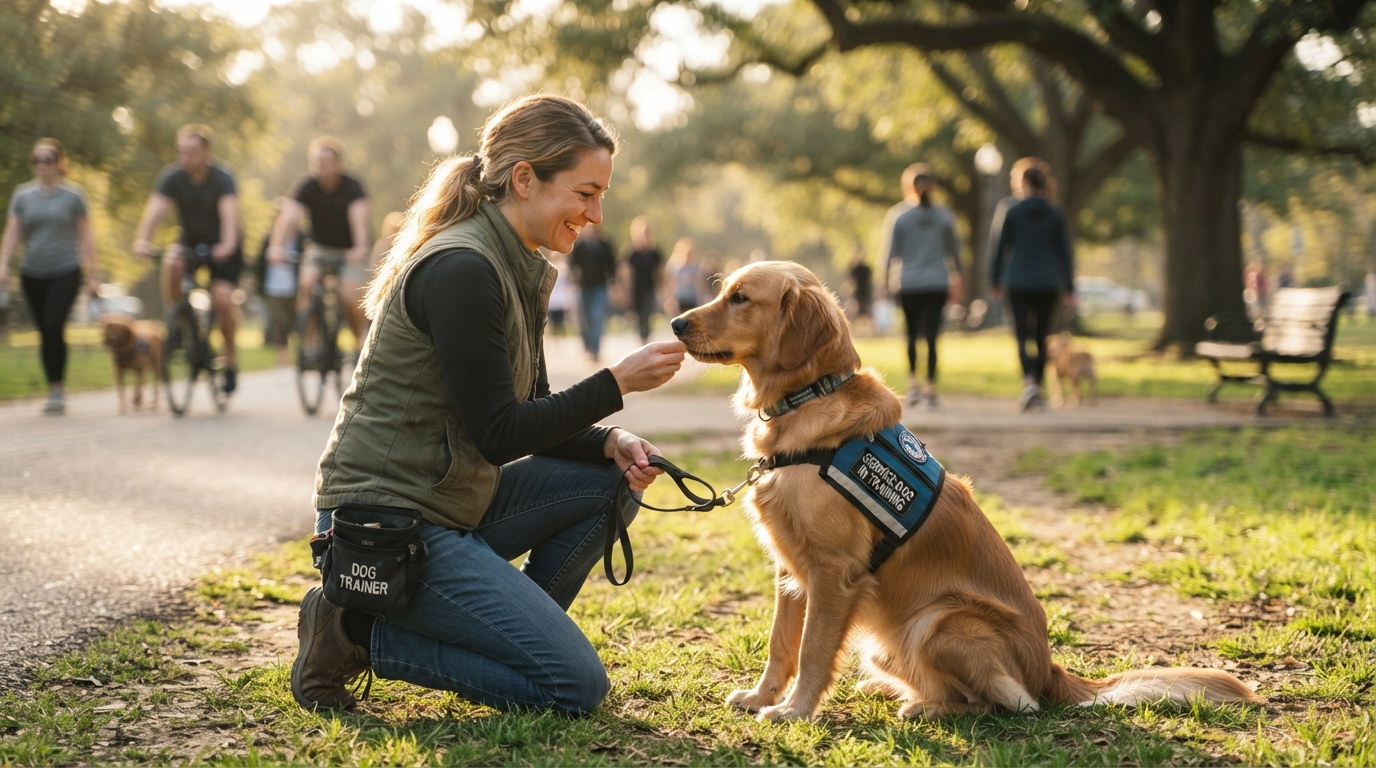
Service Animal Training Standards: Task Training vs Obedience, Public Access Essentials & Pro Tips
The Heart of Service Animal Training: Why Standards Matter
Picture this: a bustling café, silverware clinking, patrons chattering, and a service dog slips seamlessly under the table, alert yet unmoved by the whirlwind. This isn't magic—it's the pinnacle of service animal training standards, where precision meets reliability. For service dog trainers and owner-trainers, mastering these standards means the difference between a qualified partner and a pet with potential. No federal certification is required for service animals under the ADA, but rigorous self-imposed benchmarks ensure public access rights and real-world efficacy.
Service animal training revolves around two pillars: task training and obedience. While obedience lays the foundation, task training defines qualification. A service dog must perform specific tasks to mitigate its handler's disability—think alerting to seizures or retrieving dropped items—not just sit or stay on cue.
Task Training vs Obedience: Decoding Service Dog Training Standards
Obedience: The Essential Baseline
Obedience training builds impulse control and focus. Commands like heel, sit, down, and stay form the bedrock, but they're not enough alone. A well-obedient dog might excel at home yet falter in the wild unpredictability of public spaces.
Task Training: The Qualifying Edge
Task training elevates service animal training to its true purpose. These are disability-specific actions: a diabetic alert dog detecting blood sugar shifts, or a mobility aid dog opening doors. Reliability is non-negotiable—tasks must trigger on cue, every time, amid distractions like food spills or loud crowds. Trainers emphasize positive reinforcement, shaping behaviors through rewards to foster eager, accurate performance.
- Deep pressure therapy for PTSD grounding
- Momentum pulling for balance-impaired handlers
- Item retrieval from floor to counter height
Public Access Training Standards: Thriving in the Real World
Public access tests mimic everyday chaos, evaluating if a service dog ignores distractions, tucks neatly under tables or counters (no taller than 24 inches at shoulder), and maintains reliable task performance. Components often include:
- Controlled heel through crowds
- Neutral response to food, pets, or sudden noises
- Table tuck without invading space
- Task demo under stress
- Calm handler separation
Organizations like the International Guide Dog Federation or Assistance Dogs International offer public access guidelines, though no universal certification exists.
Owner-Training vs Program-Trained: Paths to Excellence
Owner-trainers invest deeply, customizing tasks over 1-2 years, often starting with puppies. Program-trained dogs from professional organizations (e.g., Canine Companions) undergo 18-24 months of rigorous vetting, costing $20,000-$30,000 but backed by teams. Both paths demand the same standards—many owner-trainers join groups like the Association of Professional Dog Trainers for mentorship.
Typical Training Timeline
- Months 1-6: Basic obedience and socialization
- Months 7-12: Task introduction and distraction proofing
- Months 13+: Public access polish and maintenance
Pro Tips for Lasting Success and Ongoing Maintenance
Maintenance is lifelong—weekly refresher sessions prevent regression. Track progress with journals, video public outings, and annual mock tests. Pro tips: Pair tasks with verbal cues only for discretion; use high-value rewards sparingly; expose early to wheelchairs, crutches, and service dog vests for desensitization. Remember, a stellar service dog isn't born—it's sculpted through patient, standards-driven service animal training.
In the end, these standards don't just open doors; they unlock independence, one precise task at a time.
About NAWN: The National Animal Welfare Network (NAWN) is America's species-neutral animal welfare platform — providing lifetime digital registry, lost-pet recovery, foster coordination, wildlife protection, youth education, and career pathways in animal welfare.