
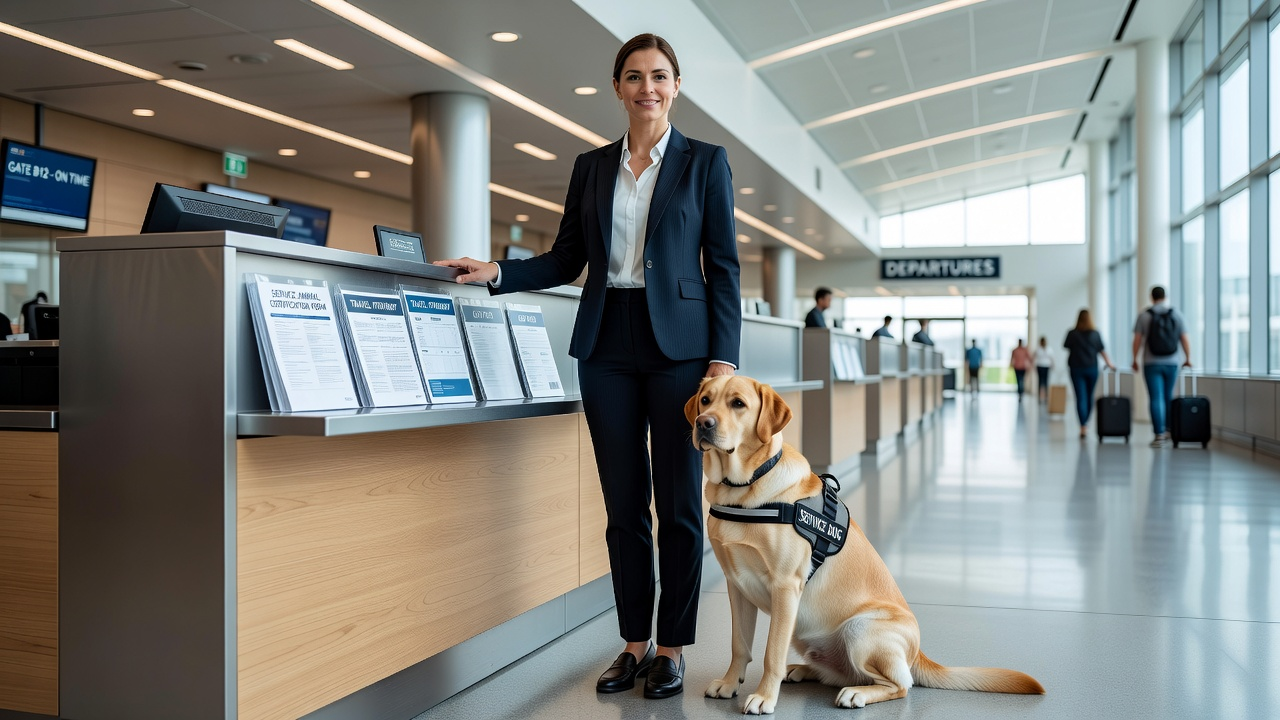
DOT Service Dog Air Travel Rules Post-2020: Forms, Attestations, Behavior & Airline Q&A
Imagine boarding a packed flight, your loyal service dog at your side, only to face last-minute scrutiny over paperwork. Since 2021, the U.S. Department of Transportation's (DOT) revised rules have streamlined service dog air travel DOT requirements, clarifying what flies and what doesn't. Gone are the days of emotional support peacocks; now, it's dogs—or rarely other animals—trained to perform disability-mitigating tasks. These travel rules service animal changes protect passengers while ensuring safety. Let's unpack the essentials for seamless journeys.
Service Animal Travel Preparation: Key Forms and Attestations
Preparation starts with two critical DOT forms, available as fillable PDFs on the DOT website. First, the Service Animal Air Transportation Form (SAATF) certifies your dog is trained for specific tasks—like alerting to seizures or retrieving items—and has no behavior issues or communicable diseases. You must submit it to the airline at least 48 hours before departure; if not, complete it within one hour of check-in.
For flights exceeding eight hours, add the Service Animal Relief Attestation Form. This affirms your dog is potty-trained (housebroken) and won't soil the cabin. No veterinary health certificate is federally required, but keep vaccination records handy—rabies proof is often airline policy.
Pro tip: Download, sign, and email forms early. Airlines like American and Southwest verify them digitally, reducing gate drama.
Behavior Standards Under DOT Rules
What Counts as 'Well-Behaved'?
Your service dog must remain under control—harnessed, leashed, or tethered at all times (unless size or health prevents it). DOT mandates no growling, biting, jumping, or disruptive barking. They can't occupy seats or aisles and must fit at your feet without protruding.
- Housebroken: No accidents in public spaces.
- Clean and groomed: Free of fleas, ticks, or odors.
- Trained response: Ignores distractions like food or other animals.
If issues arise mid-flight, airlines can relocate you or deny future travel. One untrained dog's outburst can ground everyone—hence the strict bar.
Airline Q&A: Navigating Carrier Policies
Q: Do all airlines accept the DOT forms? Yes, major U.S. carriers comply, but check specifics—Delta requires e-submission via app; United limits to two service animals per flight.
Q: What about cargo or checked baggage? Prohibited for service dogs; cabin only.
Q: Fees? None federally, though some carriers charge for non-service pets.
Q: Refusal rights? Airlines can deny if forms are missing, behavior falters, or health risks exist—but must document and assist rebooking.
International Service Dog Travel Rules
Cross borders? DOT forms suffice domestically, but international flights demand more. U.S. outbound: CDC requires rabies vaccination and microchip for dogs. Destinations like the EU mandate EU Pet Passport equivalents; Australia quarantines rigorously. Inbound to U.S.: Follow USDA/APHIS rules—no forms for service animals under 150 days post-vaccination. Always consult airline international desks and embassies weeks ahead.
Master these service dog air travel DOT essentials, and skies open wide. Safe travels with your partner in paws.
About NAWN
NAWN champions working and assistance animals through advocacy, education, and resources. Explore our travel category for more on travel rules service animal.